
By— Ro Aros Kamal, Azim Ullah, Hubabib Chowdhury and Fayazul Graphy.
Edited by ~Hubaib Chowdhury
Abstract
About 1.2 million Rohingya people have fled Myanmar due to ethnic cleansing and sought refuge in Cox’s Bazar, Bangladesh. The refugees are living in temporary settlements, many of which are situated in hilly areas of Cox’s Bazar, where inadequate access to safe water, chemically contaminated water, and sanitation facilities contributes to health risks and the spread of diseases such as cholera, typhoid and diarrhea. This exploratory study examines drinking water, cooking water, water security, and health-related challenges in Rohingya refugee camps in the Teknaf area, focusing on four camps within the larger camp network— Unchiprang (Camp 22), Leda (Camp 24), Alikhali (Camp 25), Mochoni (Camp 26) and Nayayapara registered Camp. The study aims to identify the key everyday challenges and shortages faces by Rohingya refugees in relation to drinking water and associated health issues. Both qualitative and quantitative methods were applied to determine whether water contamination occurs during the collection, transportation, and storage of drinking water. This was assessed by comparing water quality at the source with the quality of water stored at the household level. The results show that Unchiprang (Camp 22) has a comparatively greater need for safe water for daily living in several respects. These differences are associated with variations in camp planning and construction, including disease prevalence, water-collection time, sanitation standards, and access to water sources. The outcomes of this study may assist camp authorities and various agencies working in the area in developing sustainable water and sanitation interventions. Improving access to water sources, including tap stands, shallow tube wells and groundwater wells, as well as strengthening sanitation facilities, could contribute to better water access and improve the health and well-being of Rohingya refugees in Cox’s Bazar. The findings may also provide useful information and strategic direction for the global scientific and development communities working in refugee settlements in other parts of the world to address water-security challenges and the hardships associated with inadequate access to safe water.
Keywords: drinking water; water insecurity; water inequality; marginalization; water shortage; Rohingya refugees; groundwater; water and sanitation; Teknaf.
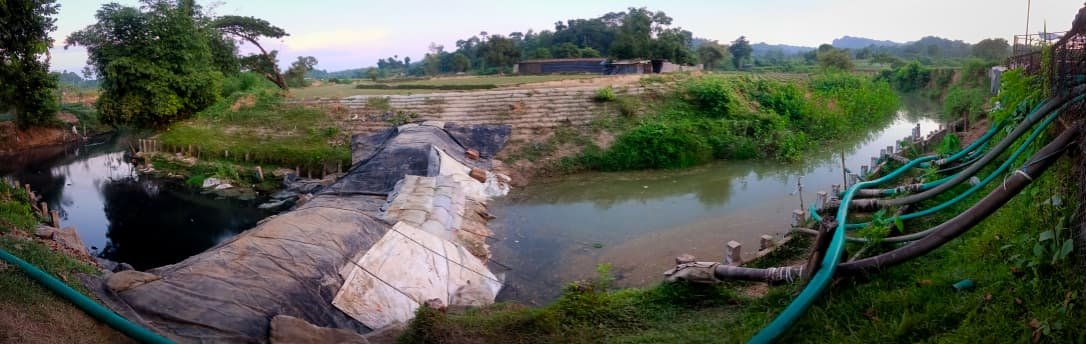
The water collection and supply system in Unchiprang Camp-22. The photograph shows the water collection infrastructure reportedly designed by OXFAM and DSK, including a network of flexible hoses and pipes used to convey water toward the camp’s tap-stand system. The collection area is located adjust to a visibly turbid and dark-water channel, with separate water flows appearing to converge around the collection structure. The visible condition of the water environment raises concerns regarding potential contamination risks during water collection and supply, particularly where drainage and water-supply pathways are located in close proximity. The image illustrates the environmental and infrastructural challenges associated with providing safe and reliable water to Rohingya refugee households in the camp.
Aros reflects:
“The water is connected to the drainage and dark water that has already been used and washed by our people. After using chemical medicines, we receive the same water again the next day and have to use it for cooking, cleaning, and drinking.”
Based on field observation and lived experience, Ro Aros Kamal, a resident of Unchiprang Camp-22, observed that drainage and water-supply pathways are situated in close proximity. His account raises concerns about possible contamination and the resulting health risks for residents who depend on the system for daily needs.
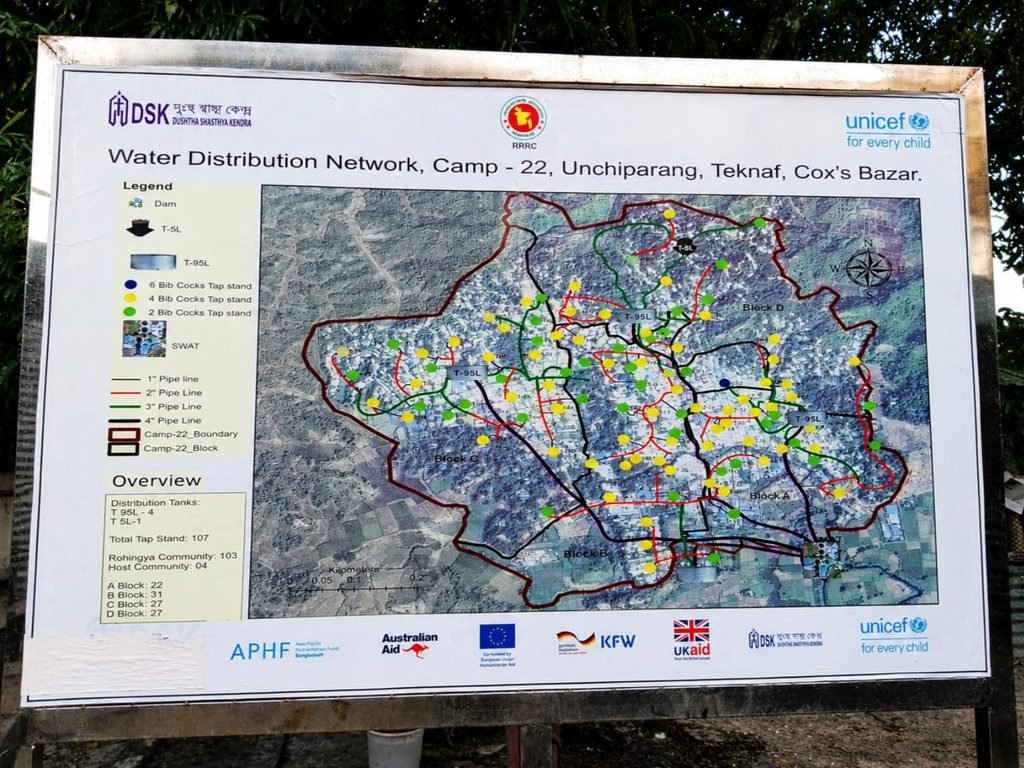
Water Distribution Network, Camp-22, Unichiprang, Teknaf, Cox’s Bazar.
The map illustrates the camp’s water-distribution infrastructure, such as water-distribution tanks, pipe networks and tap stands serving different blocks of the settlement. The network comprises multiple pipe sizes and tap-stand points distributed across the camp, demonstrating the spatial organization of water access for Rohingya and host-community households.
Distribution Tanks:
- T95l-4
- T5l-1
- Total Tap Stand: 107
- Rohingya Community: 103
- A Block: 22
- B Block: 31
- C Block: 27
- D Block: 27
- Host Community: 04
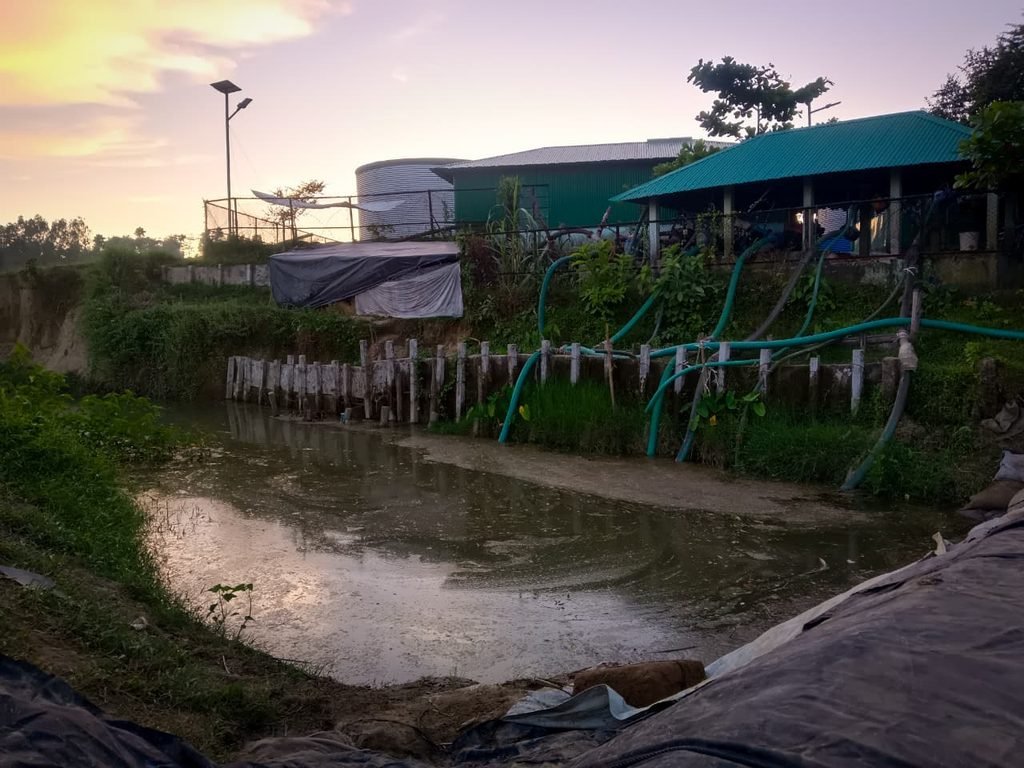
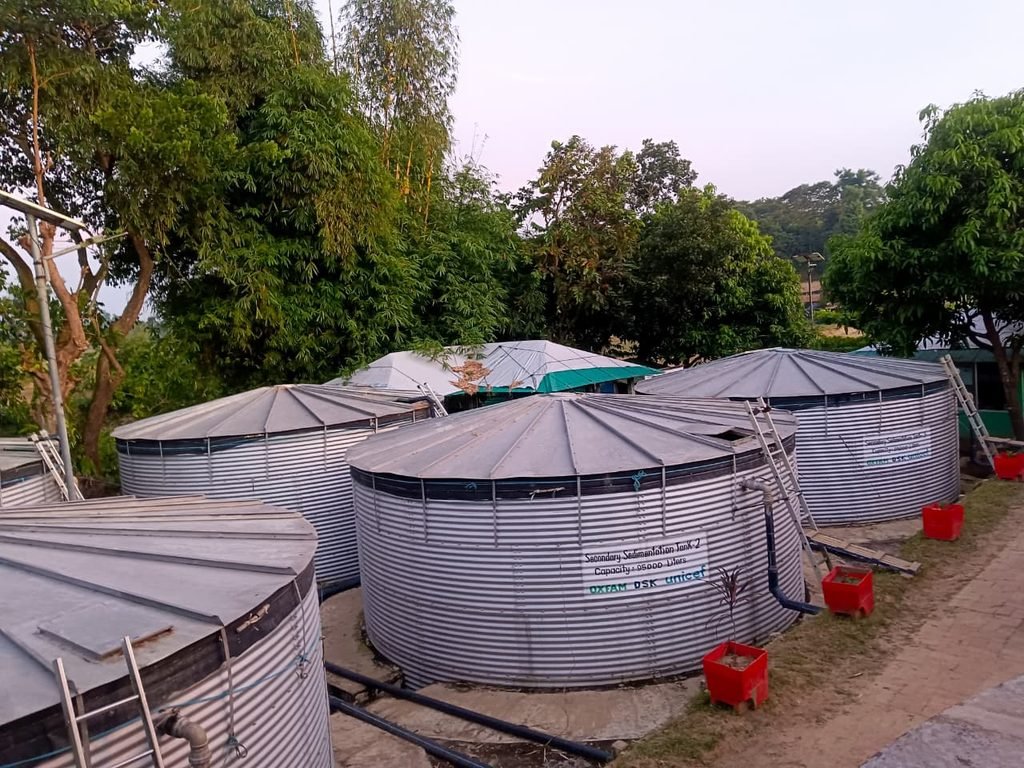
Large 95,000-liter tanks collect and store water sourced from a nearby stream in Unchiprang, Camp 22. The water is treated with disinfectants chemical medicines before being supplied to the community. The system is supported by DSK, OXFAM and UNICEF, helping provide safer water for families living in the camp.
“Ten liters is not enough, and the strong chemical smell makes us worry about our health.”Hubaib Chowdhury, a resident of Camp 22
According to Hubaib Chowdhury, the Rohingya community continues to face water shortages and daily struggles. Limited access to safe drinking water, along with concerns about the chemicals used in treatment, creates additional challenges for their health and well-being. Residents also report receiving unfiltered water, which they believe contributes to skin problems and bacterial infections. A local volunteer described the situation:
Many people here are suffering from illnesses we did not see before. In Myanmar, we were healthy even though we had limited access to hospitals. Here, there are hospitals and health-awareness programs, yet people continue to suffer. We believe unhygienic water, poor sanitation, and limited opportunities to bathe and stay clean are contributing to these illnesses.
Introduction
Access to safe and reliable water remains one of the most pressing daily challenges for Rohingya refugees living in the camps of Cox’s Bazar, Bangladesh. In the hot and densely populated settlements, water is essential for drinking, cooking, personal hygiene, and other household needs. However, limited access to natural freshwater sources, overcrowded living conditions, and inadequate water and sanitation infrastructure make it difficult for many households to secure sufficient and safe water. The hilly terrain and limited availability of natural water sources, including ponds, wells, and freshwater streams, have increased residents’ dependence on tube wells, water tanks, and distribution systems provided by humanitarian agencies. Despite these efforts, access to adequate and safe water remains a concern for some households. Potential contamination during water collection, transportation, and storage may further increase health risks, particularly where drainage systems and water-supply infrastructure are situated close to one another. These challenges highlight the need to examine not only the availability of water but also its quality, accessibility, and safety for everyday usages. This study explores water insecurity and related health challenges among Rohingya refugees in four camps in the Teknaf area—Unchiprang (Camp 22), Leda (Camp 24), Alikhali (Camp 25), Mochoni (Camp-26) and Nayapara registered (Camp). By examining water access, household practices, sanitation conditions and potential contamination risks, the study seeks to identify key gaps and inform practical interventions to improve water security and the well-being of refugee communities.
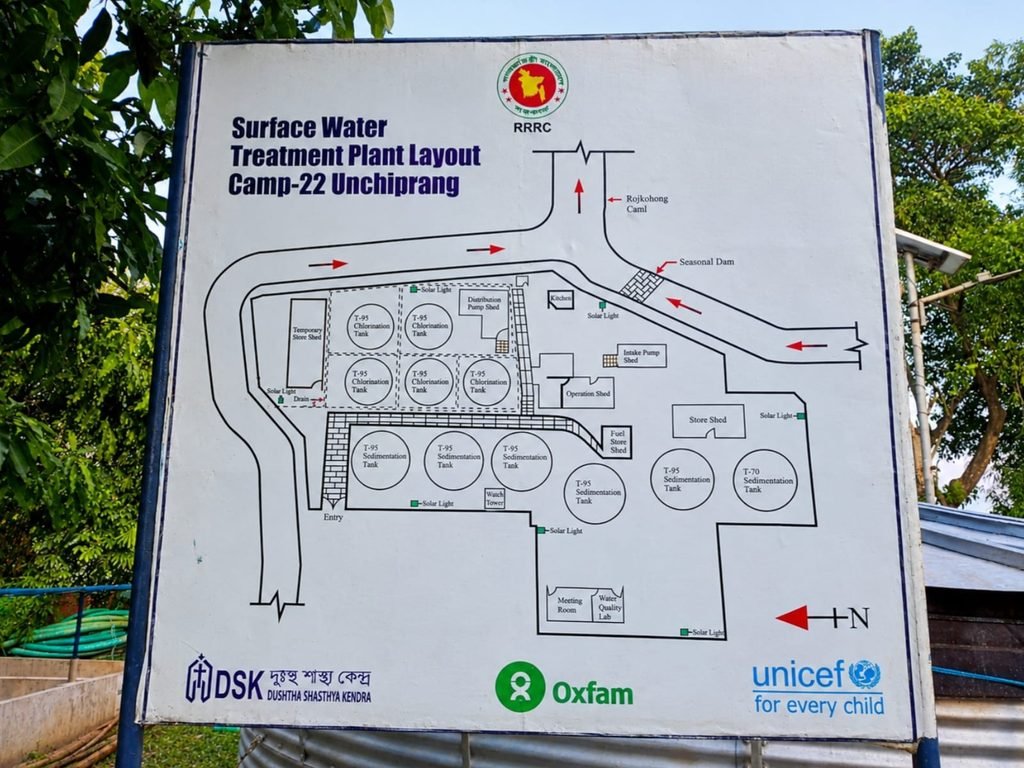
Surface Water Treatment Plant layout, Unchiprang Camp-22, The layout illustrates the treatment facility, including intake and distribution systems, chlorination and sedimentation tanks, operational units, and supporting infrastructure used in the camp’s water-supplies.

The photograph shows residents of Camp-22 collecting water from a communal distribution tap stand using plastic containers, pots, buckets and other household vessels. Water is distributed manually in two shifts daily, with households assigned to separate morning and evening collection periods. Families store the collected water in large containers for subsequent household use. Based on field observations, a household of seven members may receive approximately 10 litres per person, amounting to about 70 litres per distribution. The scene illustrates the substantial dependence of camp residents on communal water points and the logistical challenges involved in accessing and storing water for daily needs.
In each sub-block, there are one or two water stands that provide two hours of water supply per day in a block. Within each block, there are more families based areas, averaging 4 to 10 members per family. Due to the vital importance of water, people must line for hours to access it during the limited two-hour supply window. Each person can collect only 5-6 pots of water based on family members for the next 24 hours after standing several hours in serial, which is inadequate for the mentioned population size for a day. This limited access to water is provided to over 1.2 million refugees by organizations such as UNHCR, humanitarian agencies, DSK, OXFAM and the Asian Development Bank (ADB). Particularly in the dusty and high-temperature camps, the situation becomes critical, exacerbating the challenges of survival without sufficient water, leading to increased rates of shortages and different types of skins disease. Many refugees are expressed about their insufficiency of water.
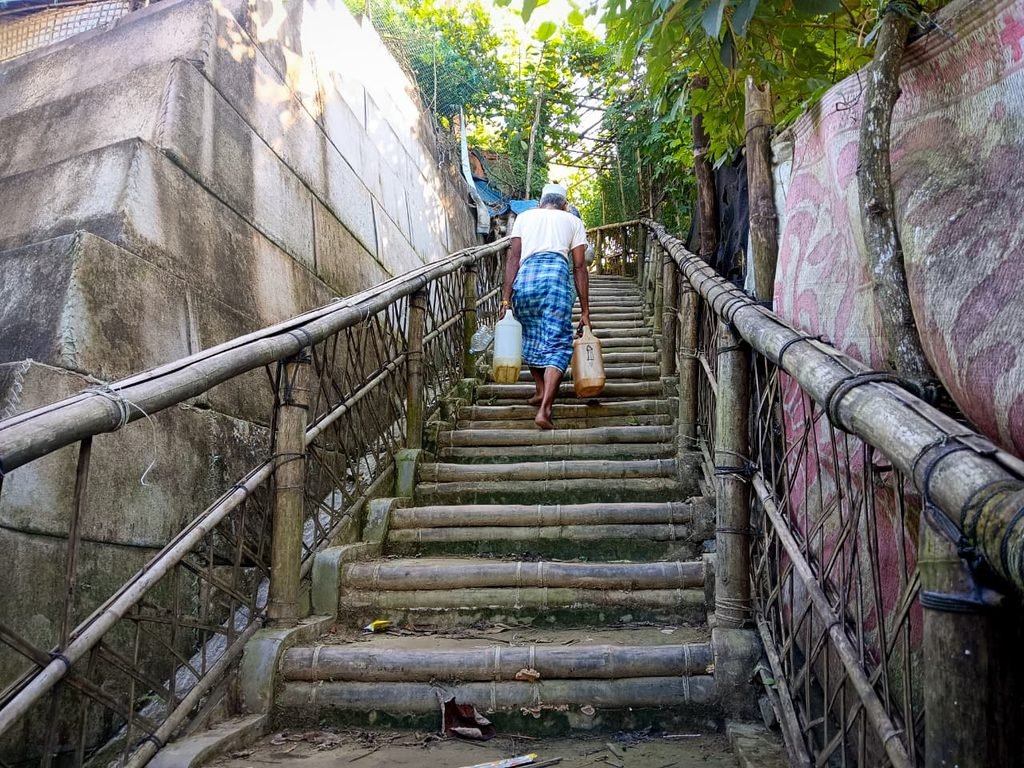
Ahzahar Hossain, a 62-year-old resident of Camp-22, lives alone and reports suffering from hepatitis C and typhoid. Despite his health difficulties, limited water access in his block requires him to collect water from a lower area of the camp. Reflecting on his experiences:
“If there were water facilities, such as a hand pump, tube well, or another accessible water source near the hill, I would not have to suffer like this today.”
The hilly topography of the mega Unichiprang refugee settlement has been the biggest challenge. Most shelters were built at the top or on the sides of hills, around 200 to 600 feet above ground. Families had to walk down the hills to collect water. His account illustrates how limited access to nearby water sources can place additional physical burdens on residents living with chronic health conditions.
“My shelter is on top of a hill, and there is no tube well nearby. Despite feeling weak and experiencing pain because of my health condition, I have to walk to the water-distribution point to collect water for our daily needs. It is very difficult. Among all the basic necessities of daily life, water is the most important. People may survive with less food, but they cannot survive without water.” Ahzahar Hossain says
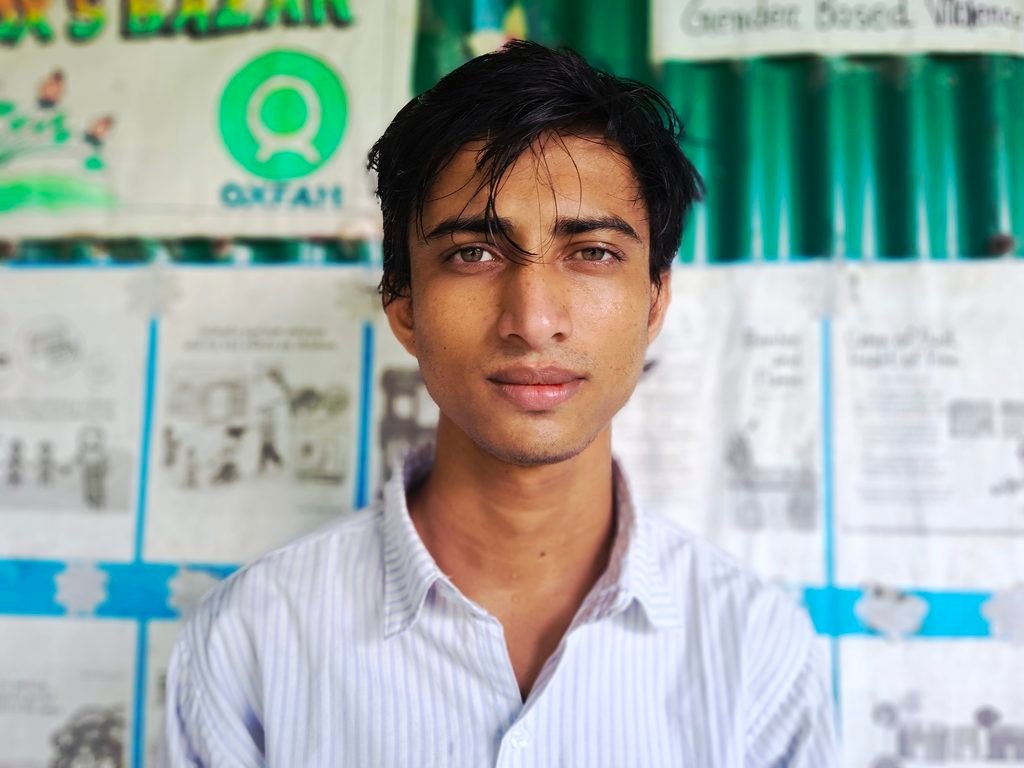
Maung Soe Win, 20, a Rohingya student of community school named KAYAPHURI (B.E.H.S ) and youth, lives in Camp-22 , mostly engages in different activities and learning to bring a peaceful and well-being of society. He explains I had a meeting:
“I needed to have a shower but there is no water in my shelter then I packed some clothes and walked for 20 minutes to take a bath as it is not time of water supply.” Maung expresses
Due to the limited water supply, residents face severe difficulties in meeting basic hygiene needs, particularly bathing. The shortage often forces them to ration water, making it difficult to obtain enough for bathing and other essential household activities.
Methodology
This exploratory study employed a mixed-methods approach to examine water access, water security, inequalities in water provision, chemical-related concerns, medication-related issues and health conditions and related health challenges among Rohingya refugees in Cox’s Bazar, Bangladesh. Field research focusing on real-life experiences and observations was conducted in four refugee camps in the Teknaf area, namely Unchiprang (Camp-22), Leda (Camp-24), Alikhali (Camp-25), Mochoni (Camp-26), and Nayapara Registerd Camp. Primary data were collected through field observations, household-level information, face-to-face discussions, Focus Group Discussion (FGD) and informal interviews with camp residents including local NGO volunteers regarding their experiences, involvement in the provision and use of drinking and cooking water, water collection and storage, sanitation, and water-related health concerns experienced in their daily lives. Particular attention was given to the distance to water sources, water-collection time, availability of communal water points, household water-storage practices, and the difficulties experienced by residents with limited access to water. This study also examined potential contamination during water collection, transportation, and household storage by comparing the observed condition and quality of water at supply points with water stored for household use. Photographs and field quotes were used to document water-distribution infrastructure, water-collection practices, drainage conditions, and the physical environment surrounding water sources, thereby providing contextual evidence and supporting the documentation of resident’s lived experiences and voices. The findings from the four camps were compared to identify differences in water accessibility, water-collection practices, sanitation conditions, and reported health challenges, including concerns related to health posts. Qualitative accounts from residents were used to complement the field observations and provide insight into the everyday experiences of water insecurity. The combined findings were then used to identify key challenges and potential areas for improving sustainable water and sanitation services in the Rohingya refugees camps in Teknaf areas.
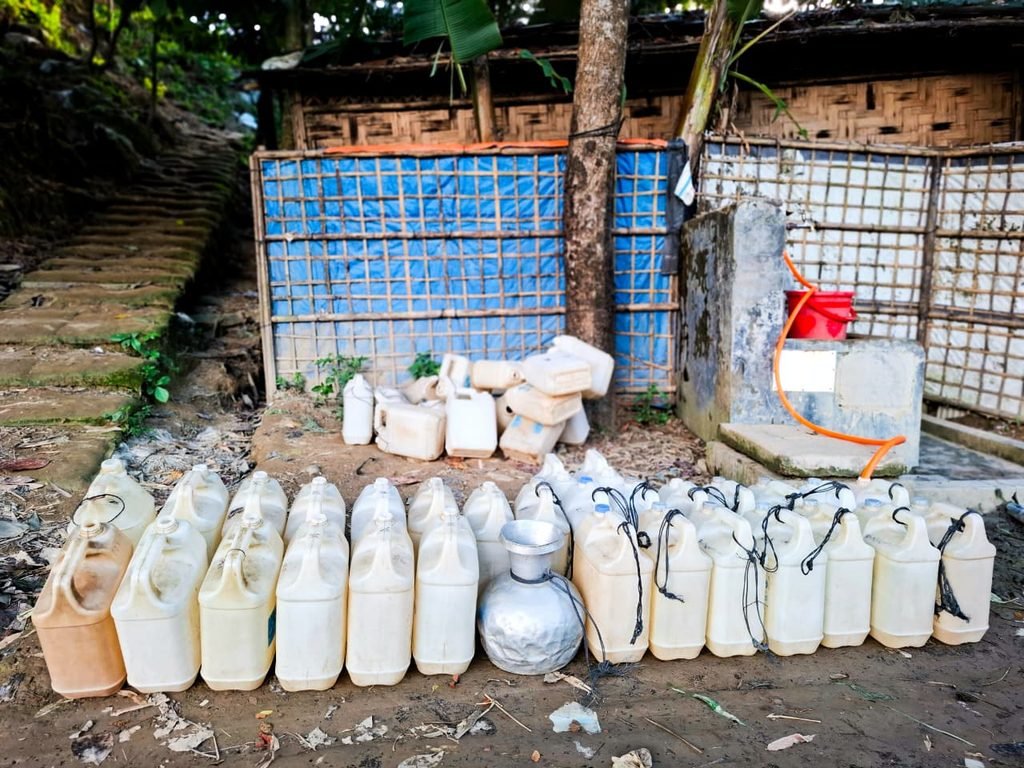
Water-collection containers lined up at a communal water point in Alikhali (Camp-25), where residents leave plastic containers, pots and buckets from the afternoon until their designated evening turn to collect water. The arrangement reflects the waiting time and daily survival of residents on communal water-collection facilities.
“There are seven people in my family, but the 70 litres of water we receive must last us for an entire day. Sometimes the water has such a strong smell of medicine that we cannot drink it. When the water is not enough and we cannot use it, we have to search for other sources, such as nearby tube wells. For us, getting enough safe water is not simply a daily task—it is a daily struggle.” Shares Nasima Akhter, resident of Alikhali (Camp-25)
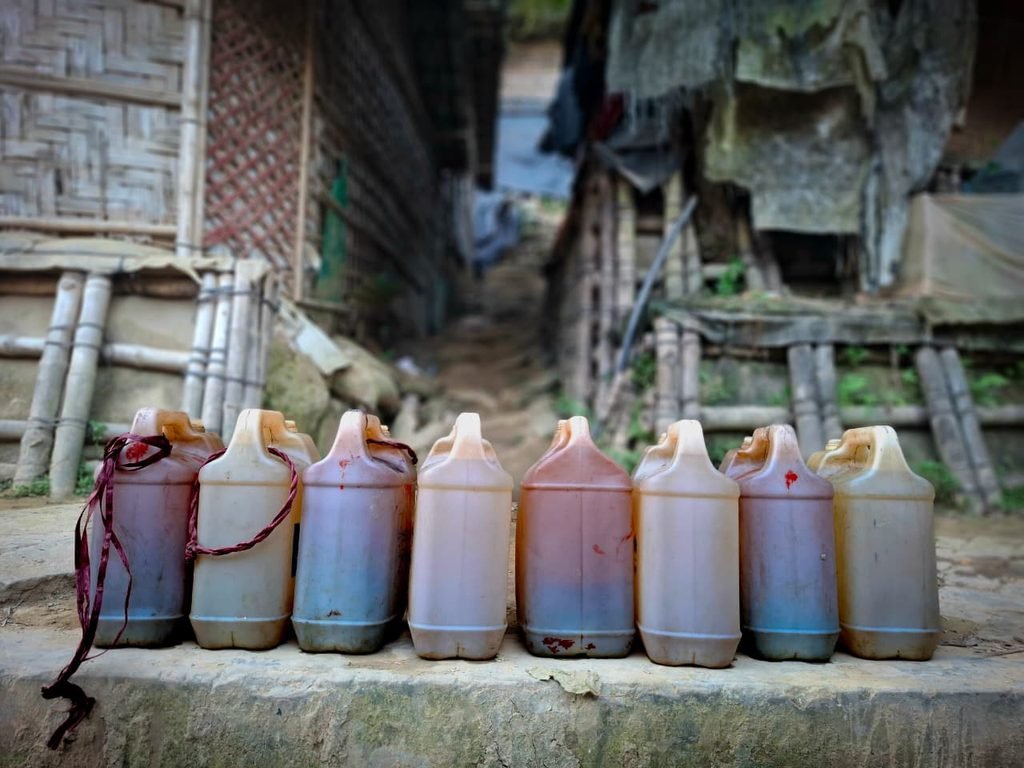
Plastic water containers filled for household use in Leda (Camp-24). Visible discoloration and staining on the exterior surfaces of the containers may reflect prolonged use, environmental exposure and treated medicines water remark.
“I bought these eight plastic containers about a month ago for our daily household use. I clean them regularly but the marks on the containers do not disappear; instead, they continue to become more visible. Meanwhile, we haven’t received plastic water containers or any water carrying tools from the camp-level NGOs for the past two years.” Mohammad Sowlaim, 54, resident of Leda (Camp-24)
Due to inadequate water availability and concerns regarding water quality and possible chemical or medicinal reduce distributed water, Rohingya refugees experience a range of reported health-related challenges. Field observations and residents’ accounts indicated concerns regarding bacterial and viral infections, diarrhea, headaches, scabies and other skin diseases, fatigue, dry mouth, excessive thirst and, in some cases, serious kidney-related health conditions. These concerns are particularly pronounced in the dusty and high-temperature environments of the refugee camps, where insufficient water availability creates additional difficulties in maintaining adequate hydration, personal hygiene, sanitation, and other essential daily needs. The combination of water scarcity, high temperatures, overcrowded living conditions and inadequate sanitation may increase residents’ vulnerability to water-, sanitation and hygiene-related health problems. Skin diseases are of particular concern in conditions where limited water availability restricts regular bathing and personal hygiene practices. WHO and Health Sector reporting has also documented a substantial burden of skin diseases among Rohingya refugees. For example, more than 52,877 cases of skin diseases were reported in July 2025, representing a significant proportion of consultations during that reporting period. Many refugees expressed concerns regarding insufficient water availability and the difficulties they face in obtaining adequate water for drinking, cooking, bathing, cleaning and other essential household activities. These accounts demonstrate that water insecurity extends beyond limited access to water and affects broader dimensions of health, hygiene, dignity and everyday well-being within the Rohingya refugee community. WHO continues to identify communicable and waterborne diseases, as well as overcrowding and disease outbreaks, as important public-health risks in the camps.
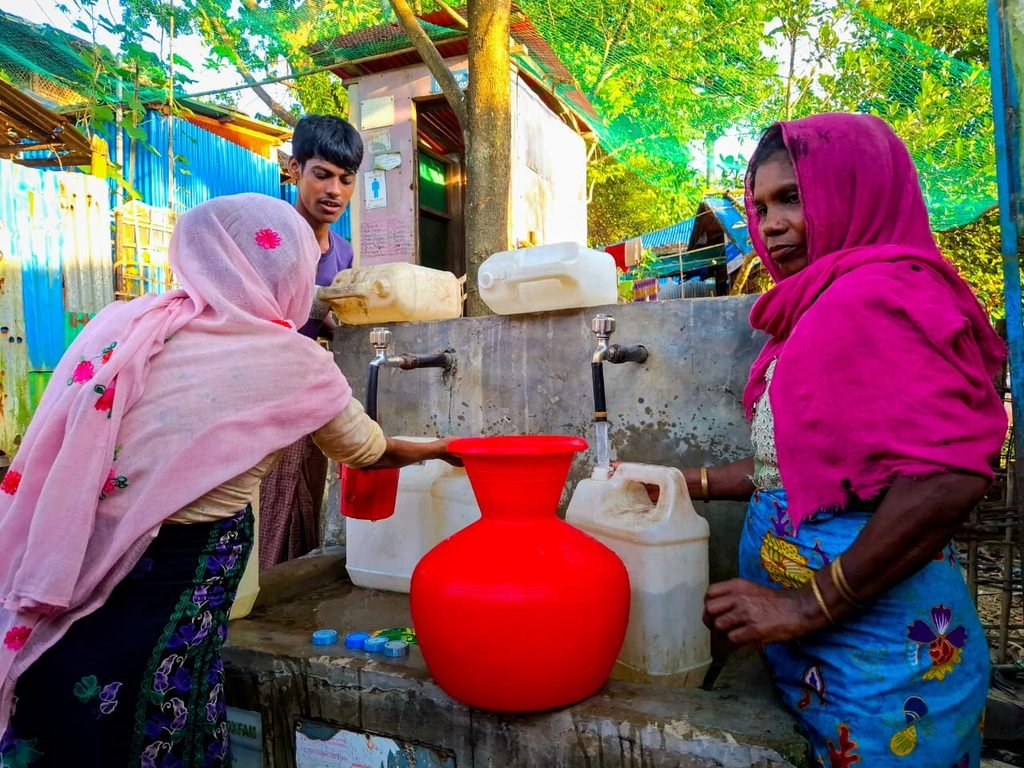
The photograph was taken at a communal water-collection point in Mochoni (Camp-26), where residents collect water from an NGO-provided tap-stand facility. Rojina and Hasina Begum are shown filling household containers at the water point, illustrating the everyday dependence of residents on communal water infrastructure for essential water needs. The surrounding bamboo shelters, household structures and shared water facilities reflect the physical and infrastructural setting of the refugee settlement.
Access to water, sanitation and hygiene (WASH) services has a special importance to the Rohingya community living in the camps of Cox’s Bazar, Bangladesh.
“Water is the most essential resource in our camp. The inadequate supply from the communal tap stands often forces my family and me to collect water from a nearby stream, where we are concerned about possible bacterial and viral contamination.” — Rojina, resident of Mochoni (Camp-26)
Materials and Usages
The study documented the materials commonly used by Rohingya refugees for collecting, transporting, storing and using water in their daily household activities. These materials very essential for their survives , they use such as plastic water containers, buckets, pots, jerry cans, bottles and other household vessels used to collect and store drinking and cooking water. Large plastic containers were commonly used to store water for extended household use because of the limited and scheduled availability of water from communal distribution points. At communal water points, residents used plastic containers, buckets, and pots to collect water and transport it to their shelters. In some areas, water was supplied through tap stands, plastic hoses, pipelines and storage tanks. Where access to the communal water system was limited, some residents also relied on nearby tube wells and other available water sources. These materials and water-supply facilities formed an important part of everyday water-management practices among Rohingya refugee households in Rohinygya refugee camps, Cox’s Bazar.

Household water-storage and collection materials used in Rohingya households. The photograph shows various water-related materials used at a Rohingya household shelter such as water stands, plastic buckets with taps, mugs, large storage tanks, jerry cans and other plastic containers. These materials are used for collecting, storing and safely managing water for households.
“Azim’s Voice: “In my family, these containers and stands are very important for storing water. They allow us to keep water safely inside our shelter and make it easier to access whenever we need it. But we do not usually drink the water supplied by NGOs in the camp. It has a strong medicinal smell, which makes us uncomfortable and reluctant to use it. Because of this, we prefer to collect water from tube wells, which we feel more comfortable using. For us, storing water is not only about having enough water—it is also about having water that we trust and feel safe using.”
Rohingya Refugee Population List in Teknaf Areas Camps
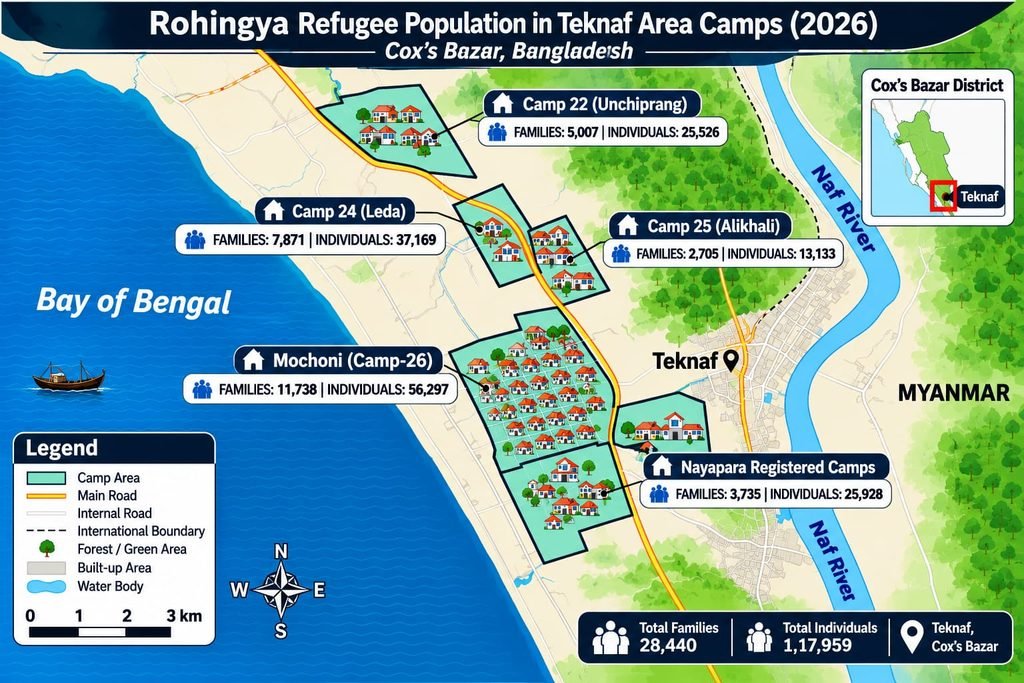
This Rohinygya refugee population lists are located in Teknaf areas, Cox’s Bazar, Bangaladesh. This published by UNHCR referral data collection on 30 September 2026. This data studied to collect accurate information and date on Rohinygya current situation and highlight the roots causes.
Primary Data
Primary field data collected from Rohingya refugee five camps which are considered in Teknaf areas and collected their households populations . They are mainly Unichiprang (Camp-22), 5,007 families and 25,526 individuals, Leda (Camp-24) 7,871 families and 37,169 individuals, Alikhali (Camp-25) 2,705 families and 13,133 individuals, Mochoni (Camp-26) 11,738 families and 56,297 individuals and Nayapara (Refugee Registered Camps), 5,735 and 25,928 individuals people. According to filed observation, more than 60% people are using tube wells , bonds, and taps and 40% people are using tap stands serving water due to chemical medicines, things and medicines to make quality water from inquisitive and perceived quality of water are closely connected to everyday household water-management practices. During the field investigation, it was observed that households used a variety of materials, including large plastic containers, buckets, pots, jerry cans, mugs, water stands, and storage tanks, to collect, transport, store and use water within their shelters. These materials were not merely household utensils but constituted an important part of the domestic water-management system. The use of large storage containers was particularly important because water from communal distribution points was not always continuously available and was often supplied according to scheduled distribution arrangements. Consequently, households attempted to collect sufficient quantities of water when it was available and store it for later use. The arrangement of containers and water stands within or around the shelter also made stored water more accessible for drinking, cooking, washing, and other domestic activities. The field observations therefore suggest that household water storage is an essential coping and adaptation practice through which families attempt to manage irregularities in water availability and maintain a basic level of water security. The primary data also demonstrate that the choice of water source was influenced not only by physical availability but also by household perceptions of water quality and acceptability. One respondent explained that the family regularly used containers and stands to keep water safely within the shelter and to ensure that it remained readily accessible. However, the respondent expresses to use water supplied through NGO-operated water systems because of what was perceived as a strong medicinal smell. According to the respondent, this sensory characteristic created discomfort and reduced the household’s willingness to use the supplied water, resulting in a preference for water collected from tube wells. This account is significant because it demonstrates that the practical use of a water source depends on more than the provision of infrastructure or the physical availability of water. People’s perceptions of taste, smell, cleanliness, safety and familiarity can influence whether they accept and regularly use a particular source. In this context, tube-well water was perceived by the respondent as a more acceptable alternative, even where other forms of water supply were available. Such preferences highlight the importance of considering users’ experiences and perceptions when assessing household water access in refugee settlements. The interview findings further reveal that water management at the household level involves a continuous process of collection, transportation, storage, and controlled use. When water is obtained from communal points or tube wells, household members must transport it to their shelters using containers that are appropriate for carrying relatively large quantities. Once transported, the water is stored in larger vessels and accessed gradually according to household needs. This practice reduces the need to collect water repeatedly throughout the day and provides households with a reserve during periods when water may not be immediately available. At the same time, the dependence on household storage places greater importance on the cleanliness, condition, and placement of containers. The materials observed during the fieldwork therefore reflect not only the physical requirements of water collection but also the ways in which Rohingya households adapt their domestic routines to the conditions of water availability in the camps. The respondent’s experience demonstrates that households actively make decisions about which water sources to use and how to store and manage the water they obtain. Household containers and storage facilities consequently function as important components of everyday adaptation to the water-supply environment. The findings suggest that understanding water security in Rohingya refugee camps requires attention not only to the quantity and distribution of water but also to the lived experiences, perceptions, and practical strategies through which households manage water in their daily lives.


A young boy, Anas pumps water from a hand-operated tube well to fill a bucket in Nayapara Registerd Camp, Teknaf. The scene reflects the daily efforts required to access water in the Rohingya refugee settlement, highlighting the importance of reliable water infrastructure, properly maintained tube wells and equitable access to safe water for all households.
“Without access to water, even taking a bath has become a luxury. When I go to school without bathing, my classmates complain about the smell. At night, the heat makes my body itch so badly that I cannot sleep. I want to go to school feeling clean and comfortable, just like other children, but the lack of water makes even that difficult.”Anas, a Rohingya refugee child
Humanitarian assistance should reach beyond the presence of projects and services to ensure that every refugee has access to safe water, proper hygiene and the basic necessities of life.
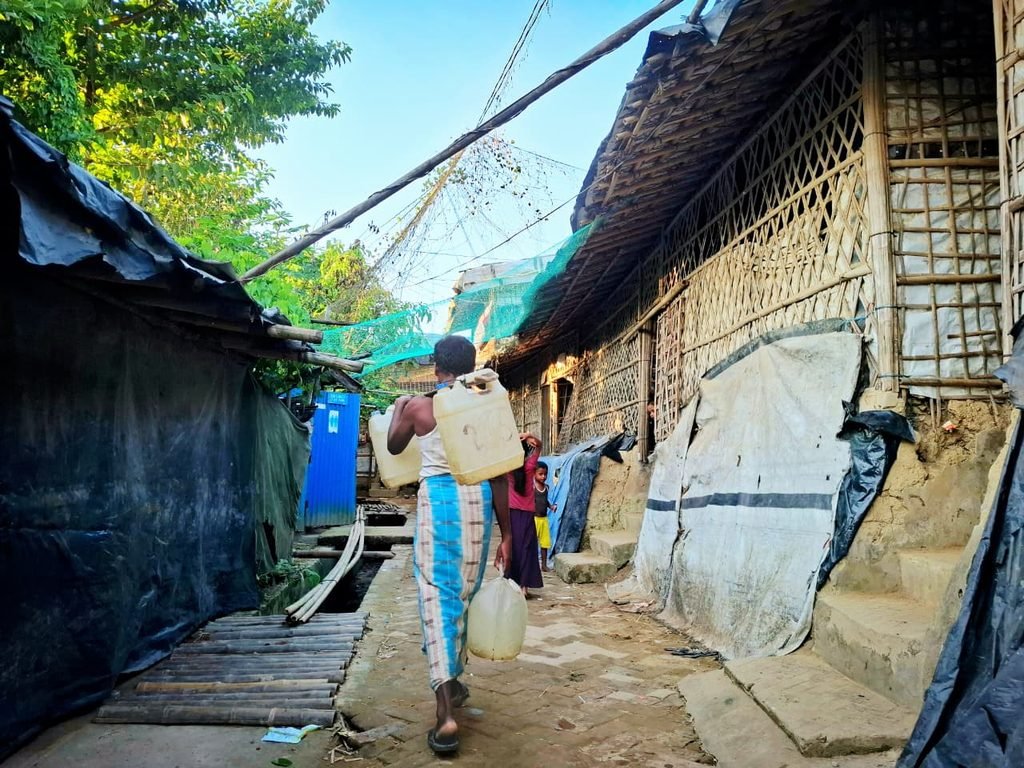
“I’m carrying these water containers 2 Km away from home on a shoulder yoke after travelling a long distance to collect water. Now, I’m heading back home.” — Mohammad Hassan, resident of Unichiprang (Camp-22), Teknaf, Cox’s Bazar.
Getting not enough water, Rohinygya Refugee are facing very challenges and hardships to manage their daliy needs water. Despite the many humanitarian projects operating in the camps, access to safe water remains a daily struggle for some Rohingya families. Many people still depend on untreated stream water for their basic needs, raising concerns about skin problems, bacterial infections, and other illnesses. Without sufficient water for bathing and personal hygiene, maintaining health and dignity becomes increasingly difficult.
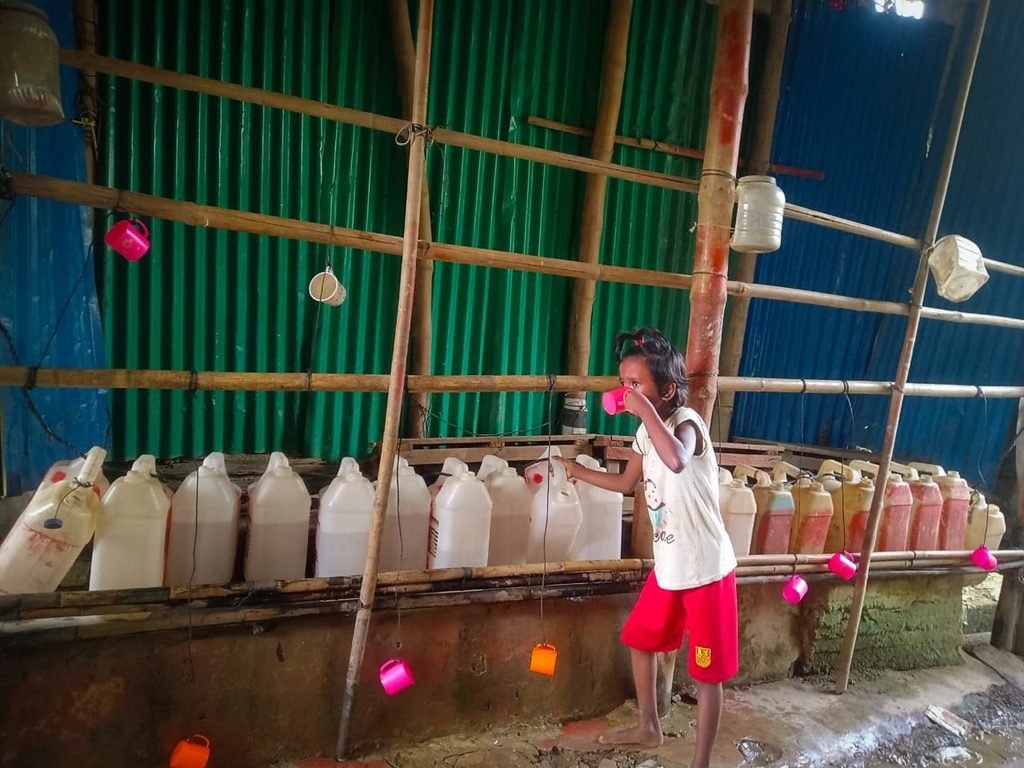
A Glass of Water, an Act of Kindness: Mahasan’s Community Service in a Rohingya Refugee Camp-22
Along the busy streets of Rohingya Refugee Camp 22 in Cox’s Bazar, Bangladesh, a simple act of kindness offers relief to people passing by. Rows of water containers stand beside the road, providing free drinking water to anyone who feels thirsty. There is no charge and no expectation of anything in return. A young girl stops to drink from one of the containers. Behind this seemingly ordinary moment is Mahasan, an elderly Rohingya shopkeeper who has been providing free drinking water to his community since 2019.
“I started providing free drinking water in 2019 with just one container,” Mahasan explained. “I keep water containers along the roadside for people who are travelling, playing, or feeling thirsty as they go about their daily activities. I believe that helping people who need water while on the road, especially when they have no other way to access it, can make a difference.”
Mahasan has continued this initiative largely through his own efforts, despite facing water shortages within his own household. He explained that no one had helped him purchase the containers or buckets needed for the service.
“My family receives only 10 litres of water per person for our daily needs. Even though we face water shortages ourselves, I reserve water for people passing by,” he said.
Mahasan has also approached the non-governmental organisations responsible for providing water services in the camp, requesting additional water and containers to support his initiative. However, he said his requests had not received any assistance.
“Despite these difficulties, I have continued this work on itmy own and spent my own money to help people,” he explained.
During the hot season, maintaining the supply becomes even more challenging. Sometimes, Mahasan has to purchase water from local residents and travel long distances by car to collect it so that he can continue providing drinking water to passersby. His initiative reflects a quiet form of community service in a place where access to basic necessities can be difficult. Although Mahasan’s resources are limited, he continues to share what he can with others.
Recommendation
Based on field observations, household-level information, qualitative interviews, community discussions and photographic documentation, photo-voice , face-to-face interview, Focus Group Discussion (FGD), data collection, population listsare, the impact of using water and health issues security. This study identifies several priority areas for strengthening water security, improving drinking-water quality, using materials and useges, the population data, the impact of using unsafe water, the overloading chemical medicines mixed with water, finding germs through water, lack of proper access of electricity and many people are using , tap stands, tube wells, bonds and tube for having access of taking water in camps-level and reducing water-related health risks among Rohingya refugees in the Teknaf area of Cox’s Bazar, Bangladesh. The reported shows across Unchiprang (Camp-22), Leda (Camp-24), Alikhali (Camp-25) ,Mochoni (Camp-26) and Noyapara Registered Camp that indicate the importance of adopting an integrated, evidence-based approach that addresses water availability, accessibility, quality, household storage, sanitation and public health. The number of water tap stands, tube wells and equitable access of getting enough water should increase in each block, ensuring water is supplied at least three times per day that 30 liters per person at least. In some blocks, NGOs provide water to each shelter via small pipelines. This method should be extended to each camp, preventing quarrels and long waits in harsh temperatures. In the Teknaf camp, where there are freshwater streams, NGOs can create water dams to supply water to the shelters. The following recommendations are proposed for consideration by relevant authorities, humanitarian agencies, NGOs supported in the camps, the supplies of water in camps-level and sanitation service providers. Among all the people are considered as:
1. Improve the Quality and Reliability of Water Supply in camps.
The water-supply systems should be evaluated to determine whether the quantity of water available to households is sufficient to meet their essential domestic needs, including drinking, cooking, personal hygiene and sanitation. Particular attention should be given to households reporting inadequate allocations, especially larger families and households containing older people, persons with disabilities, or individuals with health-related limitations. Distribution schedules, household allocations and service interruptions should be systematically documented to identify gaps between water demand and actual provision. Water-supply planning should be guided by applicable humanitarian standards and public-health recommendations, taking into account population size, household composition, environmental conditions and seasonal variations in water availability.
2. Drinking-Water Quality Monitoring and Treatment of Chemical Medicines.
The regular water-quality assessments should be conducted at water-intake points, treatment facilities, storage tanks, communal distribution outlets, and household storage containers, Microbiological and chemical analyses should be undertaken using appropriate sampling procedures and established water-quality standards. Particular attention should be given to indicators of faecal contamination, relevant chemical parameters and residual disinfectant concentrations. Water-treatment procedures, including chlorination and the use of chemical medicines should be monitored to ensure effective disinfection and appropriate dosing. Residents’ reports of unusual odours, taste, or discoloration should be investigated through systematic testing. Such observations may indicate a need for further assessment but should not, in isolation, be interpreted as proof of chemical contamination. Transparent communication of monitoring results would strengthen public confidence and support informed household water-management practices.
3. Reduce Spatial Inequalities and Increase Quality of Water in the Camps.
The water-distribution infrastructure should be evaluated in relation to population density, settlement layout, topography, household distribution and the distance between shelters and communal collection points. In Unchiprang (Camp-22), field observations suggest that hillside settlement patterns and the location of water points may increase the physical effort required for water collection by some residents. Comparable assessments should be conducted in Leda (Camp-24), Alikhali (Camp-25) and Jadimura (Camp-27) to identify differences in accessibility and infrastructure provision. According to their voices, the water collection of electricity will be increased and connected at the exact location and time while taking water at the tap stands. Depending on the results, interventions may include establishing additional tap stands, improving pipeline coverage, strategically locating storage facilities, and upgrading existing distribution networks. The feasibility of groundwater development, including shallow tube wells, should be assessed through hydrogeological investigations and water-quality testing to determine its technical, environmental and public-health suitability.
4. Improve Household Water Collection and Materials.
The provision of appropriate household water-storage materials should be strengthened, particularly for households experiencing difficulties storing sufficient water between scheduled distribution periods. Suitable materials may include covered, cleanable, food-grade containers, buckets fitted with taps and appropriately sized storage vessels. Hygiene promotion should address container cleaning, safe water transportation, covered storage and methods of dispensing water that minimise contamination during household use. These measures should be supported by regular monitoring and community education. However, household-level interventions should complement rather than substitute for adequate water provision.
5. Reduce of Water-Related Health Risks and Decrease Illness.
Reported health concerns, including diarrhoeal illness, skin conditions, suspected infections, and symptoms potentially associated with inadequate hydration, should be documented and assessed by qualified health professionals. Where appropriate, public-health surveillance should be coordinated with water-quality monitoring to investigate potential relationships between environmental conditions, water availability, sanitation and reported illness. Clinical assessments, laboratory investigations, and epidemiological data should be used to distinguish residents’ perceptions from medically established diagnoses and causal relationships. Health facilities and WASH agencies should develop referral and information-sharing mechanisms, consistent with confidentiality requirements, to support timely identification of potential public-health threats. Future studies should investigate the relationship between water-related exposures and reported health outcomes using clearly defined research methods.
6. Strengthen Institutional Coordination and Infrastructure Maintenance.
Effective water-security interventions require coordination among relevant government authorities, camp management, Refugee Relief and Repatriation Commissioner (RRRC), United Nations agencies, OXFAM, Unicef, UNHCR, BRAC, IOM and including humanitarian organisations, implementing partners and technical service providers. Responsibilities for water treatment, infrastructure maintenance, quality monitoring, distribution management, and emergency response should be clearly defined. Regular technical inspections should assess the operational condition of storage tanks, pipelines, tap stands and treatment facilities. Maintenance plans should account for population changes, settlement characteristics, seasonal conditions and the reliability of existing water sources. The feasibility of new infrastructure should be determined through technical assessments, environmental considerations and consultations with affected communities in camps.
Conclusion
The findings of this exploratory study highlight the need for a coordinated and evidence-based response to drinking-water insecurity among Rohingya refugees in the Teknaf area of Cox’s Bazar. The reported experiences of residents across the study locations indicate that water insecurity involves interconnected challenges relating to supply adequacy, physical accessibility, household storage, perceived water quality, sanitation, and health-related concerns. Addressing these challenges requires interventions that combine infrastructure improvements with systematic water-quality monitoring, effective sanitation management, community participation, and public-health surveillance. Priority should be given to independently verifying suspected contamination risks, assessing the adequacy and reliability of household water allocations, and identifying populations facing substantial physical barriers to water collection. These assessments should inform targeted interventions supported by measurable indicators, clearly assigned institutional responsibilities, and regular monitoring of service outcomes. By integrating technical assessments with community knowledge and public-health evidence, humanitarian actors and relevant authorities can develop more responsive and sustainable strategies to improve water security. Such efforts are essential to reducing avoidable risks, strengthening equitable access to basic services, and protecting the health and dignity of Rohingya refugees living in Cox’s Bazar, Bangladesh.
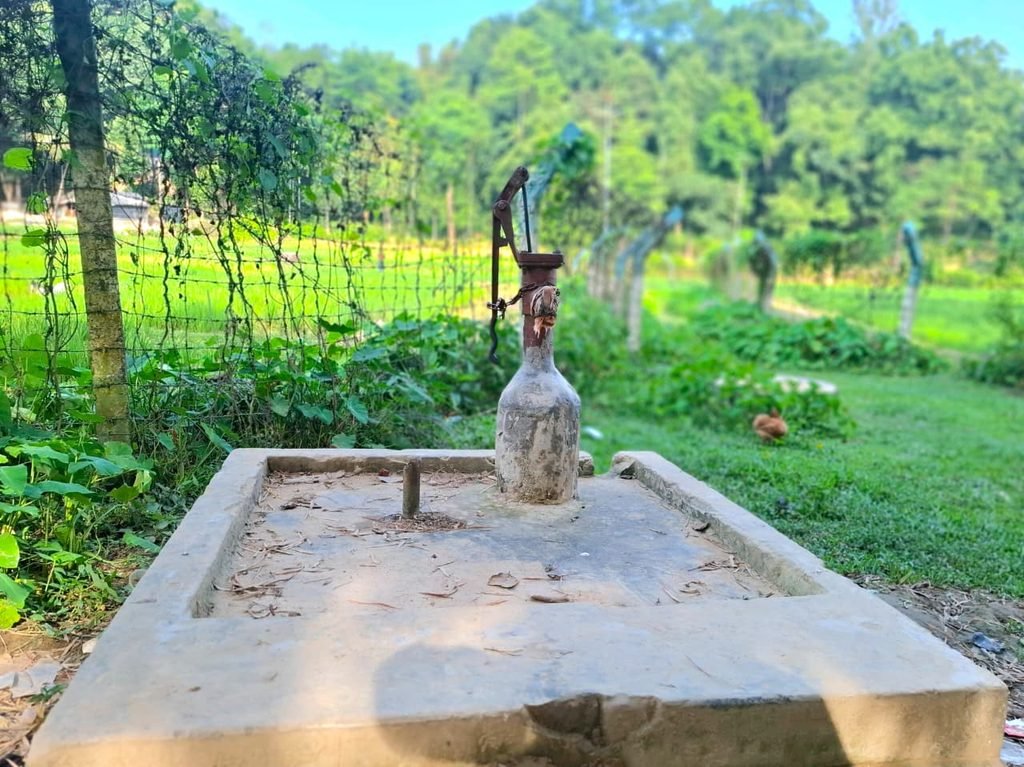
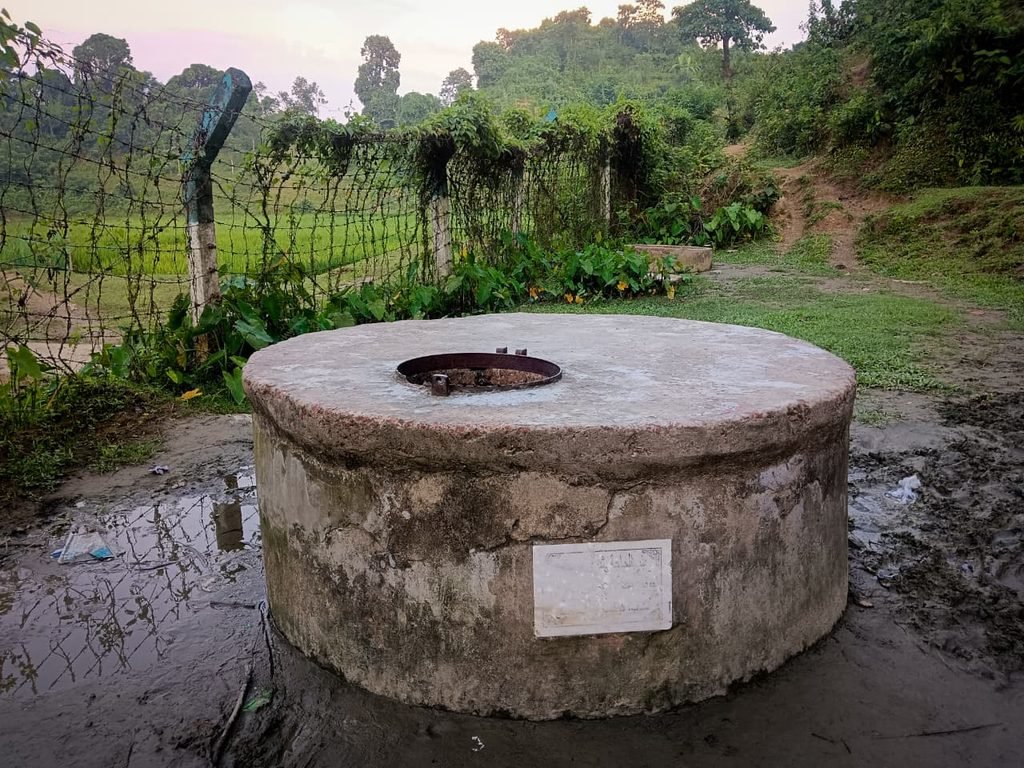
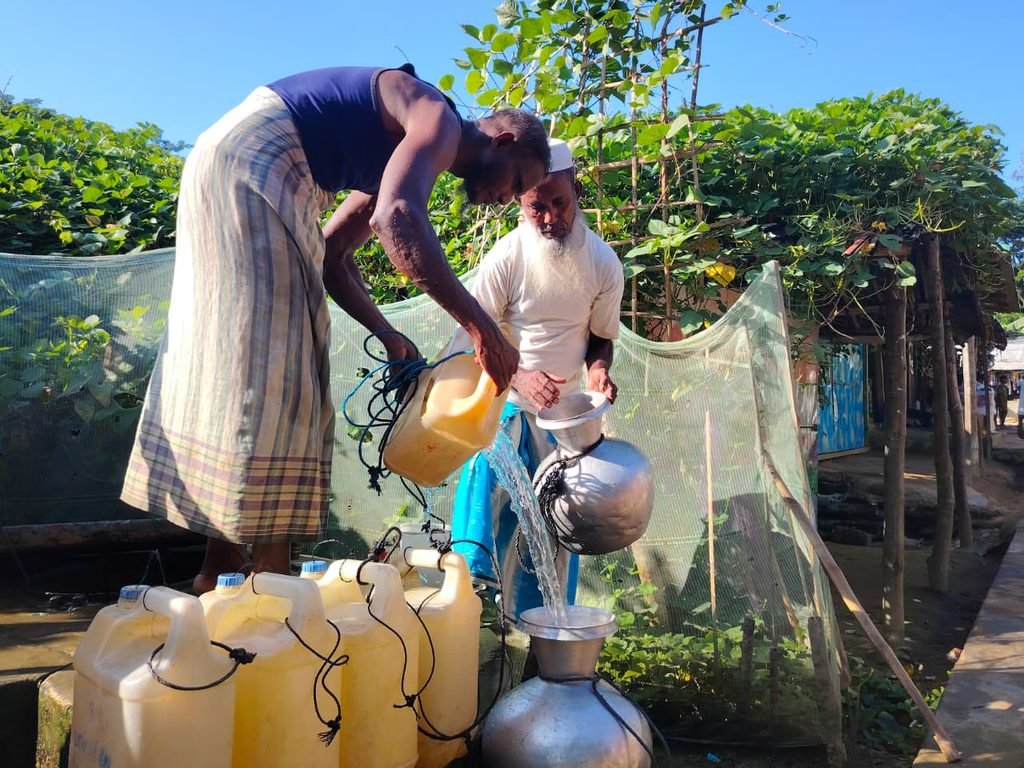
A community constructed well near the barbed-wire perimeter and hillside provides access to fresh water for an estimated 30–50 families in the camp. Residents say the well offers a convenient source of clean, cool water, particularly for those who return from work late at night or collect water at dawn.
“As $10 per person per month is not enough to support my family, I have to leave early in the morning to work in nearby local villages. When I return, I can collect clean, cool water from this well at a convenient time, such as at night or before dawn. I also believe the well water is safer than the chemically treated water provided by NGOs,” said Hashim, 30, a resident of Camp-22.
According to residents, the water supplied by humanitarian organizations is insufficient for their daily needs and raises concerns about its suitability for drinking, cooking, and washing. They emphasize the importance of access to sufficient, safe drinking water and appropriate water storage facilities.
REFERENCES
- World Health Organization. (2022). Guidelines for drinking-water quality: Fourth edition incorporating the first and second addenda. Geneva: WHO. https://www.who.int/publications/i/item/9789240045064
- Sphere Association. (2018). The Sphere Handbook: Humanitarian Charter and Minimum Standards in Humanitarian Response. Geneva: Sphere Association. https://spherestandards.org/handbook/
- United Nations High Commissioner for Refugees. (2022). WASH Knowledge, Attitudes and Practices Survey 2022: Bangladesh. UNHCR. https://datacatalog.ihsn.org/catalog/11985
- UNICEF Bangladesh. (2023). Bangladesh Humanitarian Situation Report: End-Year, 1 January–31 December 2023. UNICEF. https://www.unicef.org/media/151381/file/Bangladesh-Humanitarian-SitRep-%28End-Year%29%2C-1-January-to-31-December-2023.pdf
- World Health Organization. (2022). World report on the health of refugees and migrants. Geneva: WHO. https://www.who.int/publications/i/item/9789240054462
- Assessment of water, sanitation and hygiene services within nineteen Rohingya camps in Cox’s Bazar, Bangladesh in 2022. (2025). BMC Public Health. https://pmc.ncbi.nlm.nih.gov/articles/PMC12147237/
- United Nations High Commissioner for Refugees. (n.d.). WASH: Water, sanitation and hygiene. UNHCR. https://www.unhcr.org/handbooks/wash/
- World Health Organization. (2022). Cox’s Bazar monthly situation report: Rohingya crisis. WHO Bangladesh. https://cdn.who.int/media/docs/default-source/searo/bangladesh/bangladesh—rohingya-crisis—pdf-reports/sitreps/2022/who-cox-s-bazar-monthly-situation-report-1.pdf
About the Authors:
This research article is prepared by Azim Ullah (TG Ãzîm), Ro Aros Kamal, Hubabib Chowdhury and Fayazul Graphy. These emerging Rohingya young researchers are youth activists, community teachers, photographers, photojournalists , human rights Advocate and dedicated learners striving to bring positive change to their people. They are actively involved in documenting the challenges faced in the camps, raising awareness on critical issues such as health, hygiene, and water crisis, and contributing to research-driven advocacy. Through their roles as teachers, volunteers, and young researchers, they highlight environmental and public health issues, empower their communities, and advocate for sustainable solutions that improve the lives of Rohingya refugees. Together, they represent a new generation of Rohingya voices committed to creating a healthier, cleaner, and more dignified living environment for their people in the Rohingya Refugee Camps.

7 Responses
Well-done!
Well done! Very hardworking contributions. I hope your work pays off.
Great job !
This is the critical situation that we face daily in the refugee settlement
Nice one 👍🏾
Really Nice One
This article highlights the key areas which camps are mainly facing challenges and struggles in their everyday lifes in Cox’s Bazaar, Bangladesh. Well written and organised!