
Photo credit: © Azim Ullah / BRAC-UNICEF
By TG Ãzîm (Azim Ullah)
Edited by RB Hafizu
A future shaped by girls themselves
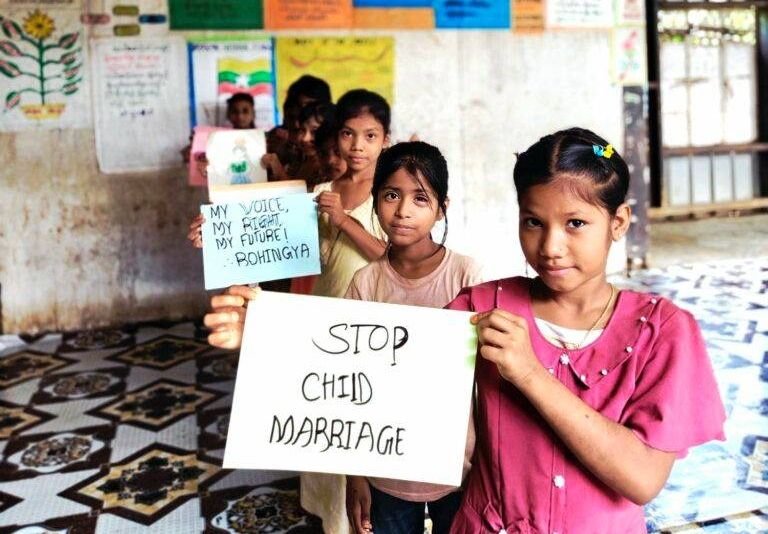
Bright smiles, bold dreams. At a learning centre in the Rohingya refugee camps of Cox’s Bazar, young girls are finding a space to learn, build confidence and raise their voices against child marriage. Through education and peer engagement, they are beginning to challenge harmful practices and imagine a future shaped by their own aspirations.
In the world’s largest refugee settlement, young Rohingya girls and boys are finding ways to speak out against harmful practices, including child marriage. Through education and awareness activities, they are learning about their rights and sharing their hopes for a different future.
Adolescents and young people make up more than one-third of the Rohingya refugee population in Cox’s Bazar and Bhasan Char. Yet displacement, poverty, limited access to education and a lack of livelihood opportunities leave many young people facing serious challenges. Girls are particularly vulnerable to protection risks, including early marriage, gender-based discrimination and restrictions on their freedom.
According to the background information provided for this article, nearly 90 per cent of Rohingya youth are out of school or training, while more than 80 per cent lack access to life-skills opportunities. These barriers can make it difficult for young people to develop their abilities, pursue their ambitions and participate fully in their communities.
For Rohingya girls, education is about more than learning to read and write. It can also help them understand their rights, make informed decisions, express their concerns and take part in shaping their futures.
Young voices against child marriage
At a learning centre, 12-year-old Shohida speaks confidently about the consequences of child marriage. She understands that marriage before a girl is ready can interrupt her education, put her health at risk and limit her opportunities.
“When young girls are married, they lose their health, their education, everything. I want to stop that. I want to help my peers not to do the same and follow our religion,” she says.
Shohida’s words reflect a determination to protect other girls from experiences that may prevent them from reaching their potential. Her voice also challenges the idea that children should remain silent about decisions affecting their lives.
When girls have opportunities to learn, discuss their concerns and share their experiences with their peers, they can become important advocates for change within their families and communities.
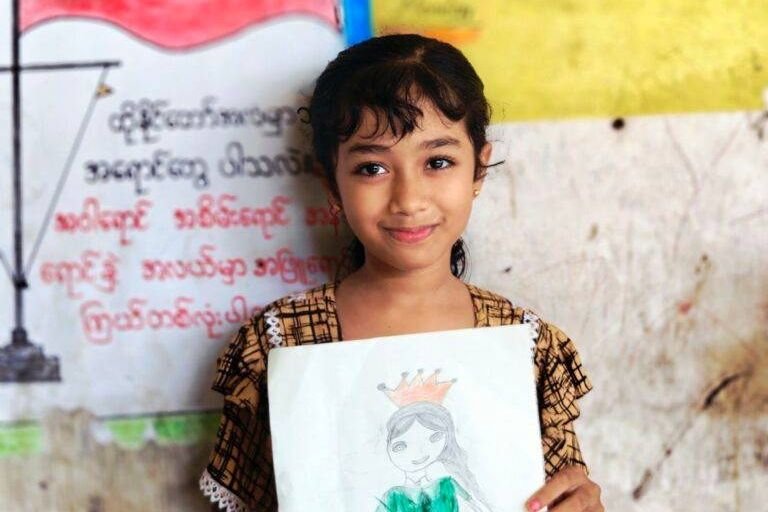
Photo credit: © Azim Ullah / BRAC-UNICEF
Breaking the silence around girls’ health
For many Rohingya girls and women, social stigma can make it difficult to discuss menstruation, reproductive health and emotional well-being. A lack of safe spaces for these conversations can leave them without reliable information or support when they need it.
Ayesha, 19, is a young mother with a 15-month-old daughter. Through sessions on menstrual hygiene and well-being, she has found opportunities to discuss subjects that were previously difficult to talk about.
“It was taboo to talk about menstruation before. But here, we learn, we ask, we share. When I’m stressed, I call the helpline or speak to a counsellor. I feel heard,” she says.
Ayesha’s experience highlights the importance of creating supportive environments where girls and young women can ask questions without fear of shame or judgement. Access to accurate information, counselling and trusted support services can help them better understand their health and well-being.
Her story also illustrates why support for girls must extend beyond the classroom. Education, health information, emotional support and protection services are interconnected parts of helping girls live with dignity and make informed choices.
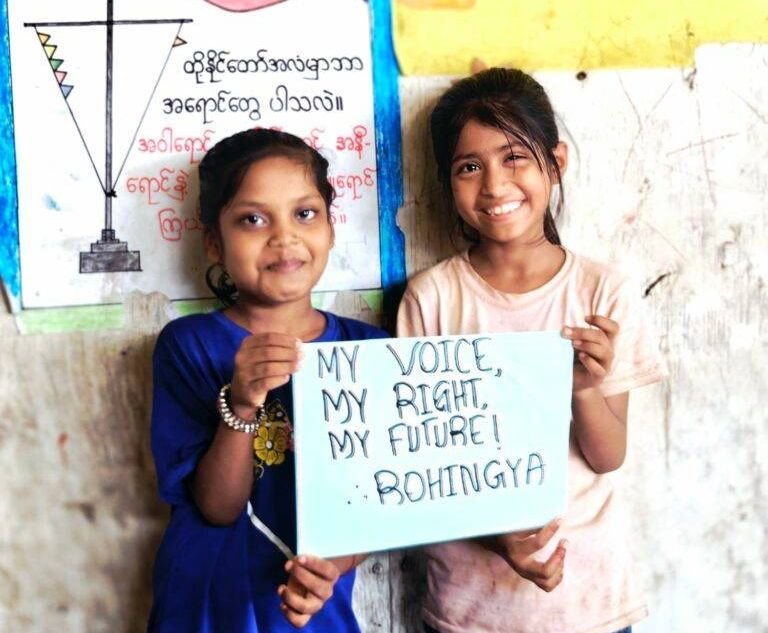
Photo credit: © Azim Ullah / BRAC-UNICEF
Education as a path to greater choices
Like Ayesha, many Rohingya girls face barriers that threaten their education, independence, health and safety. Early marriage, limited learning opportunities, financial hardship and social stigma can narrow their choices and make it harder for them to determine their own futures.
Girls’ education, therefore, requires more than providing learning materials or opening classrooms. It also means addressing the social and practical barriers that prevent girls from attending learning centres, continuing their studies and participating in community life.
BRAC teachers conduct home visits and meetings with mothers to discuss girls’ education, child marriage and health. They also work with young peer leaders to raise awareness and encourage families to support girls’ learning.
These efforts can help build trust between families and educators while creating opportunities for girls to express themselves and develop confidence. When parents and community members understand the value of education, they can play an important role in helping girls continue learning.
However, lasting change requires sustained engagement. Girls need supportive families, safe learning environments and meaningful opportunities to participate in decisions that affect their lives.
A message to the world: Stop child marriage
Somaiya and Safa, two classmates at a BRAC learning centre, have a direct message for the world: “STOP CHILD MARRIAGE.”
Their words are simple, but their message is urgent. They are calling for a future in which girls are not forced to give up their education, childhood or aspirations because of early marriage.
For these young students, speaking out is a way to demand change and remind others that girls deserve to be heard. Their message also reflects the importance of involving children and adolescents in conversations about their rights, rather than treating them only as recipients of protection and support.
Ending child marriage requires collective action from families, educators, community leaders, humanitarian organisations and other relevant institutions. Awareness activities can help challenge harmful practices, but they must be accompanied by continued access to education, protection services and support for girls and their families.
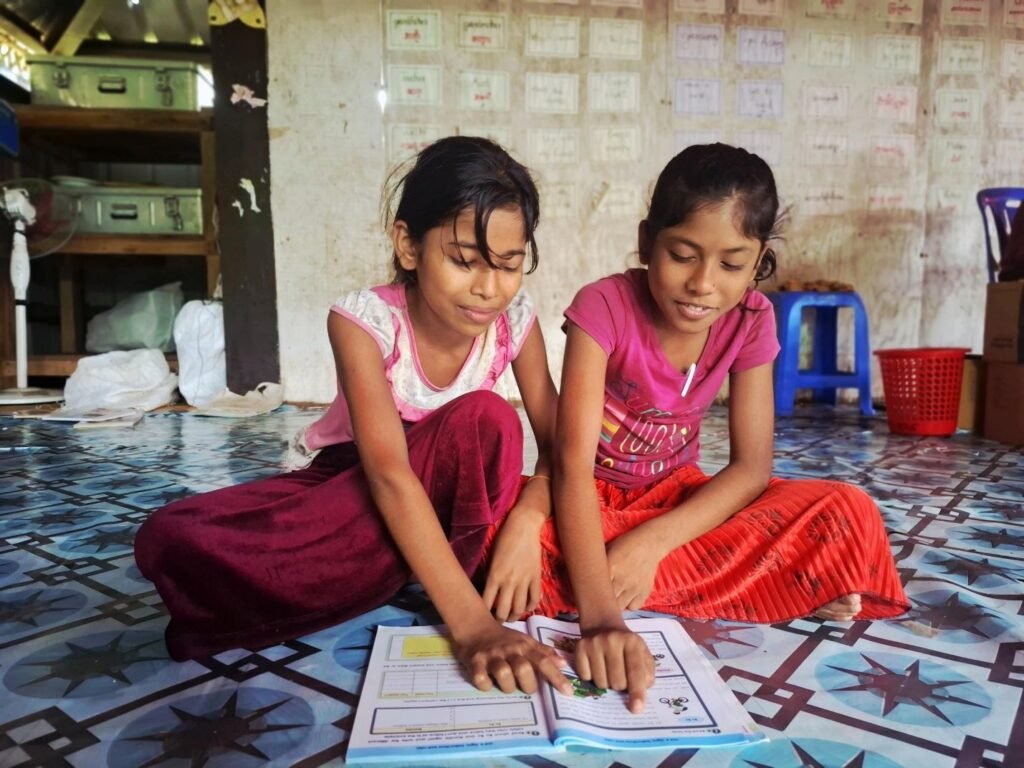
Photo credit: © Azim Ullah / BRAC-UNICEF
My voice, my right, my future
Many Rohingya girls continue to face social restrictions that limit their freedom, access to education and participation in learning. Their ability to express their views and pursue their ambitions depends not only on their determination but also on whether the people around them support their rights.
Two classmates at a learning centre hold a portrait bearing the message, “My Voice, My Right, My Future — Rohingya.” The words represent a call for equal access to education and the opportunity for girls to imagine and pursue a future of their own.
Giving girls a voice means more than allowing them to speak. It means listening to their concerns, taking their views seriously and including them in decisions that affect their education, safety and well-being.
For Rohingya girls living in displacement, this is especially important. Their futures are shaped by circumstances beyond their control, but their ideas, ambitions and abilities should not be overlooked.
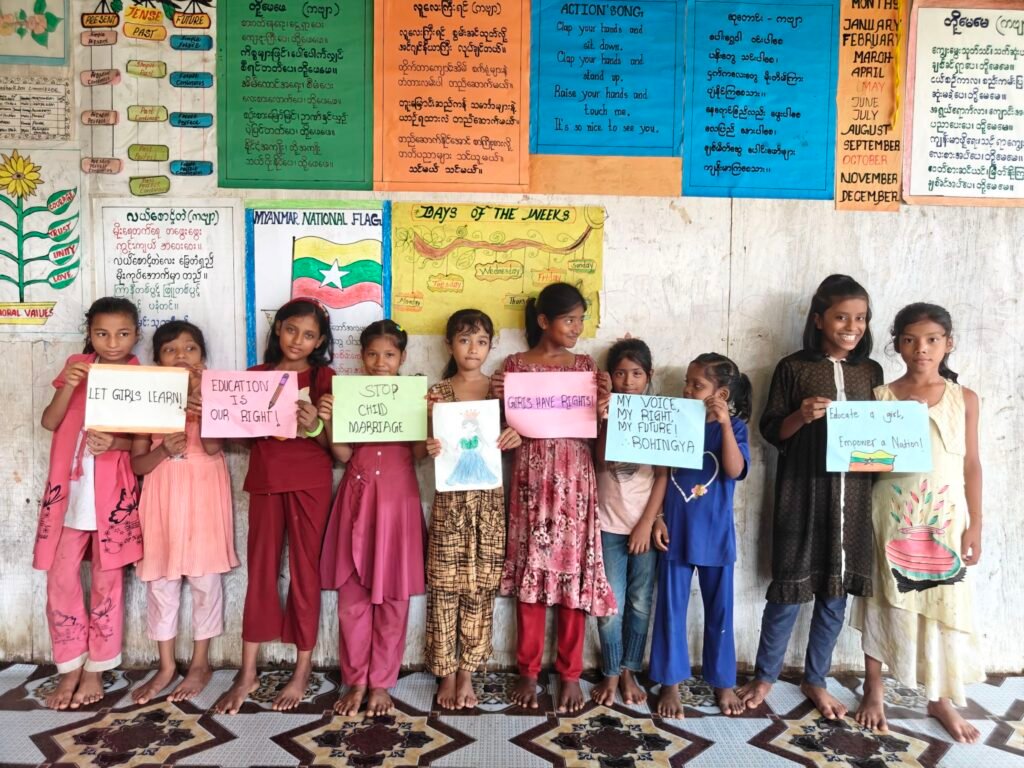
Photo credit: © Azim Ullah / BRAC-UNICEF
Educate a girl, empower a community
“Educate a girl, empower a nation.”
A young Rohingya girl proudly shares this message about the importance of girls’ education. Her words reflect a principle that reaches beyond the individual: when girls have opportunities to learn, they can develop their knowledge, skills and confidence and contribute more fully to their communities.
For Rohingya families living in refugee camps, education can provide children with opportunities to develop their abilities despite the uncertainty of displacement. Girls who can continue learning are better positioned to explore their interests, understand their rights and participate in community life.
Education alone cannot remove every barrier facing Rohingya girls. However, when it is supported by safe learning spaces, family engagement, health information and protection services, it can help create conditions in which girls have greater choices.
Learning together, growing together
At the heart of a BRAC learning centre in Cox’s Bazar, two classmates share a book as they study together. The everyday moment captures another important part of education: learning is not only about individual progress but also about cooperation, friendship and mutual encouragement.
For children growing up in displacement, learning spaces can offer opportunities to build relationships, develop confidence and maintain a sense of possibility despite difficult circumstances.
Every opportunity to learn matters. Ensuring that girls can access these opportunities without discrimination or pressure to marry early is essential to protecting their rights and supporting their aspirations.
Her future cannot wait
A girl’s future should be shaped by her aspirations, not cut short by child marriage.
International Day of the Girl, observed on 11 October, offers an opportunity to amplify girls’ voices and renew commitments to their rights. The experiences and messages captured in these photographs point to a clear principle: every girl deserves the opportunity to learn, feel safe, express herself and imagine a future of her own.
For Rohingya girls in Cox’s Bazar, however, these aspirations continue to face barriers. Child marriage, gender-based discrimination, restrictions on mobility, financial hardship and limited educational opportunities can prevent girls from reaching their potential. When a girl is forced to leave school or marry before she is ready, she may lose opportunities to develop her abilities, make informed decisions and pursue her ambitions.
Addressing these challenges requires sustained commitment from families, community leaders, educators, humanitarian organisations and other stakeholders. Girls need access to quality learning opportunities, safe spaces, reliable health information and protection from harmful practices. They also need their voices to be heard and their choices to be respected.
Education is a fundamental right, not a privilege. For Rohingya girls living in refugee camps, it is also an investment in their dignity, their opportunities and the future of their community.
Their dreams should not be limited by their circumstances. Their voices should not be ignored. Their childhoods should not be cut short.
Her education. Her rights. Her future. These must be protected today, not tomorrow.
References
1. UNICEF Bangladesh, “A girl’s place is in the classroom: Making education more inclusive in the Rohingya refugee camps” (23 August 2022).(https://www.unicef.org/bangladesh/en/stories/girls-place-classroom-making-education-more-inclusive-rohingya-refugee-camps)
2. UNICEF Bangladesh, “Building Hope and Resilience in Cox’s Bazar” (girls’ education and volunteer support).https://www.unicef.org/bangladesh/en/stories/building-hope-and-resilience-coxs-bazar
3. UNICEF, “Rohingya crisis” (updated 3 August 2026).(https://www.unicef.org/emergencies/rohingya-crisis)
4. UNICEF Bangladesh, “Expanding Education for Rohingya Refugee Children in Bangladesh.”(https://www.unicef.org/bangladesh/en/stories/expanding-education-rohingya-refugee-children-bangladesh)
5. UNFPA Bangladesh, “Korean-Funded UNFPA Project Reaches 80,000 Rohingya Girls and Women to Combat Child Marriage” (10 April 2025).(https://bangladesh.unfpa.org/en/news/korean-funded-unfpa-project-reaches-80000-rohingya-girls-and-women-combat-child-marriage)
6. UNFPA Bangladesh, “We Are the Change: Young Rohingya Refugees Speak Against Child Marriage.” (https://bangladesh.unfpa.org/en/news/we-are-change-young-rohingya-refugees-speak-against-child-marriage)
7. UNFPA Bangladesh, “She Changed Her Parents’ Minds. Now She Helps Other Rohingya Girls Do the Same” (12 October 2026).(https://bangladesh.unfpa.org/en/news/she-changed-her-parents-minds-now-she-helps-other-rohingya-girls-do-same)
Rohingya Response, “Education — Cox’s Bazar.” (https://rohingyaresponse.org/sectors/coxs-bazar/education/)
About the Author:
TG Ãzîm (Azim Ullah) is a young researcher, teacher of BRAC Unicef, visual storyteller and human rights Advocate from the Rohingya community. Based in the Rohingya refugee settlement in Cox’s Bazar,Bangladesh, he documents everyday experiences, community resilience and barriers to essential services through photography, storytelling and research-informed writing. His work focuses on amplifying voices that are often underrepresented, with particular attention to children’s education, human rights, dignity, identity and community life. Alongside community-based education work, he uses documentary photography and narrative reporting to bring lived experiences for betterment of community.


One Response
Her voice and education are totally matters for having a better future. Well done Azim!