
By RB Hafizu
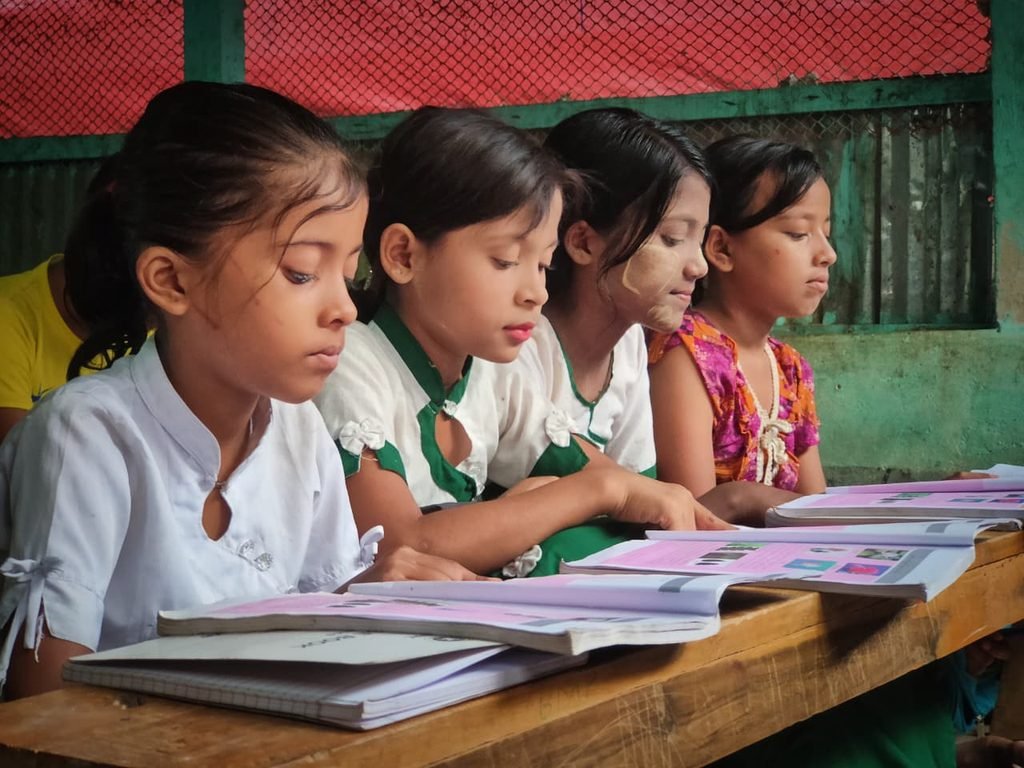
Rohingya women educators and girls strive to keep learning alive despite financial hardship, household responsibilities and limited opportunities for higher education.
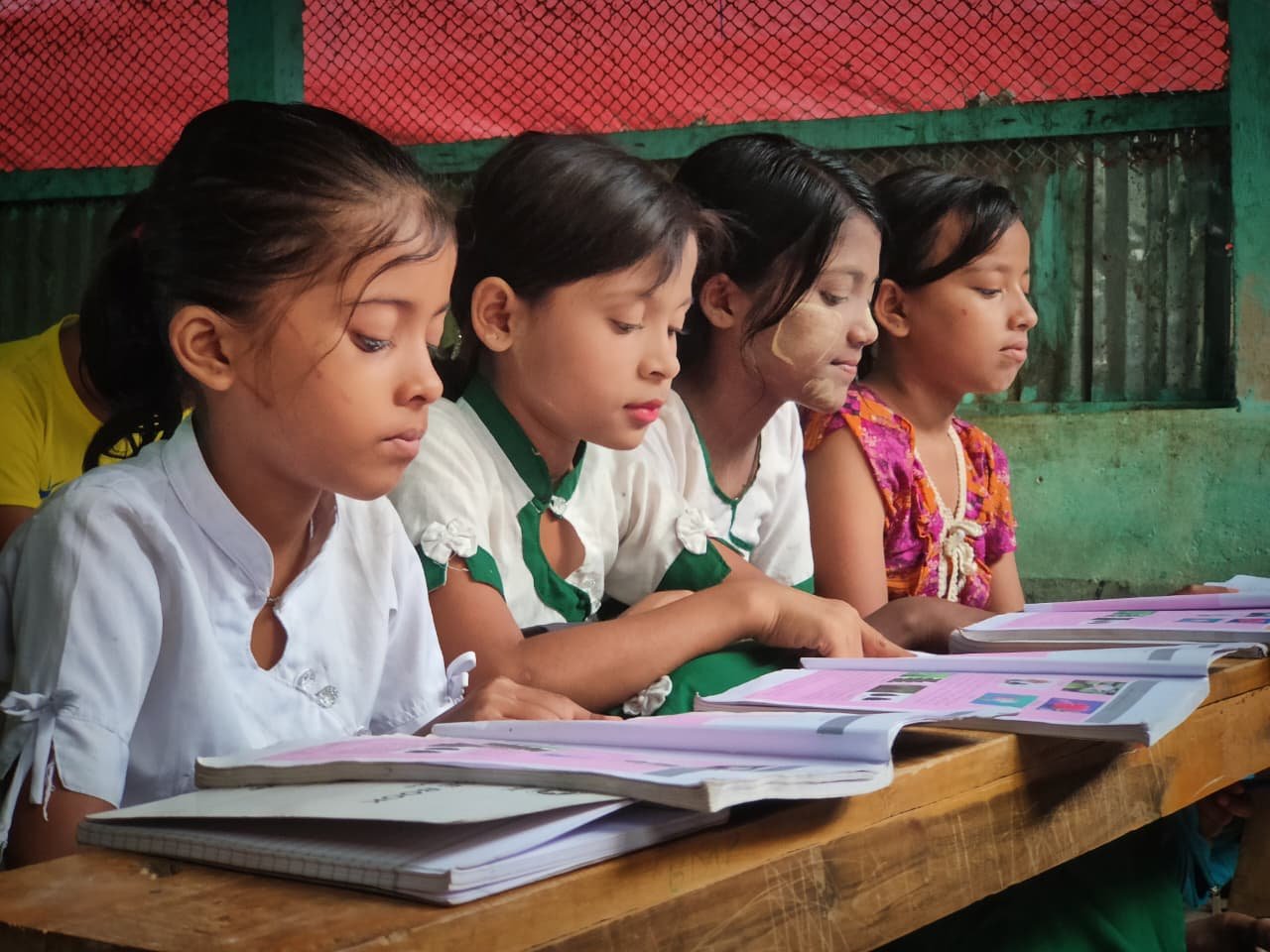
For many Rohingya girls living in refugee camps in Cox’s Bazar, Bangladesh, education represents a chance to build a different future. They dream of becoming doctors, teachers and engineers who can serve their community. But financial hardship, household responsibilities, crowded learning environments and limited opportunities for higher education make those ambitions difficult to achieve.
Amid these challenges, Rohingya women educators are working to keep community-based schools running and encourage students to continue learning. Their efforts provide girls with opportunities to study, develop confidence and imagine futures beyond the restrictions they face.
Yet the experiences of teachers and students reveal a difficult reality: determination matters, but girls also need resources, family support and opportunities to continue their education.
Women building opportunities through education
Sumaiya Akter, has eight years of teaching experience. She teaches English to Grade 9 students and takes on school management responsibilities. Through her work with an NGO, she teaches additional subjects, including mathematics, Burmese, social studies, life skills and science.
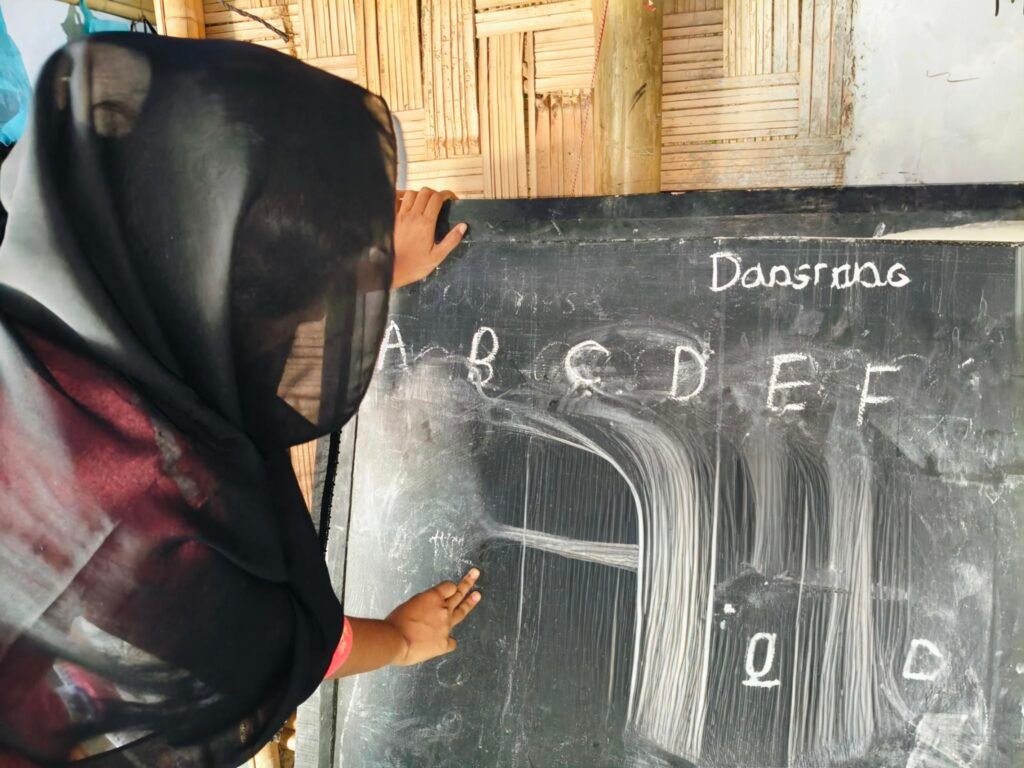
For Sumaiya, teaching means helping students develop their abilities and prepare for the future. She encourages them to see education as more than a way to pass examinations.
“Learn your education not just to pass your exams, but to show the world your talents. Be curious, and never be afraid to ask questions. Mistakes are proof that you are trying, and trying is the first step toward success,” she tells her students.
Her advice reflects the kind of education she wants her students to receive: one that builds confidence, encourages curiosity and helps them recognize their potential.
But delivering that education is difficult when resources are scarce. Sumaiya says the school lacks adequate teaching materials, projectors, practical learning equipment and subject-specific teacher training. Although it follows Myanmar’s new curriculum, the community-based school lacks official recognition and institutional support.
She explains that teachers need appropriate materials to deliver lessons effectively, particularly when the curriculum requires practical activities. Without them, students may learn scientific concepts without having the opportunity to put those concepts into practice.
For Sumaiya, keeping the school operating is only part of the challenge. Students also need the resources and learning opportunities that will help them prepare for their future.
Building a school despite limited support
Rozia Akter completed Grade 10 in 2017 before fleeing conflict in Myanmar. After arriving in Bangladesh, she began teaching and later established Wisdom Tree High School on 3 August 2023.
According to Rozia, the school has grown from six teachers to 14 educators. It serves 389 students, including 96 girls and 293 boys.
She leads the school and teaches biology and science. Maintaining the institution, however, has brought considerable challenges.
Rozia says many families cannot afford even small contributions toward school expenses, making it difficult to provide learning materials and pay teachers. Some teachers volunteer, while others work with NGOs and use their stipends to support their own household expenses.
The school also faces uncertainty about the recognition of its certificates. Rozia says the certificates issued by the school are not formally recognized outside the community, potentially limiting students’ opportunities to pursue further education.
Teachers from different camps have contributed ideas toward establishing an examination board intended to standardize examinations and make students’ academic records more credible, she says. However, the initiative does not guarantee formal recognition of the certificates itself.
Rozia has also asked how her interview will be used, where it might be published and what benefit it could bring to the school. Her questions reflect the concerns of an educator trying to maintain a school while hoping for greater support.
Her experience raises an important question: how can women educators sustain schools and encourage girls to pursue education when financial and institutional support remains limited?
When family responsibilities interrupt education
For some Rohingya girls, the challenges of education extend beyond the classroom. Household work and caring responsibilities can leave them with less time to study or force them to miss school.
Jesmaida, a 12-year-old Grade 7 student at Rohingya Education and Mirror For Generation, says she sometimes has to cook, manage the household and care for her younger siblings when her mother is sick. As the eldest girl in the family, she says these responsibilities fall to her.
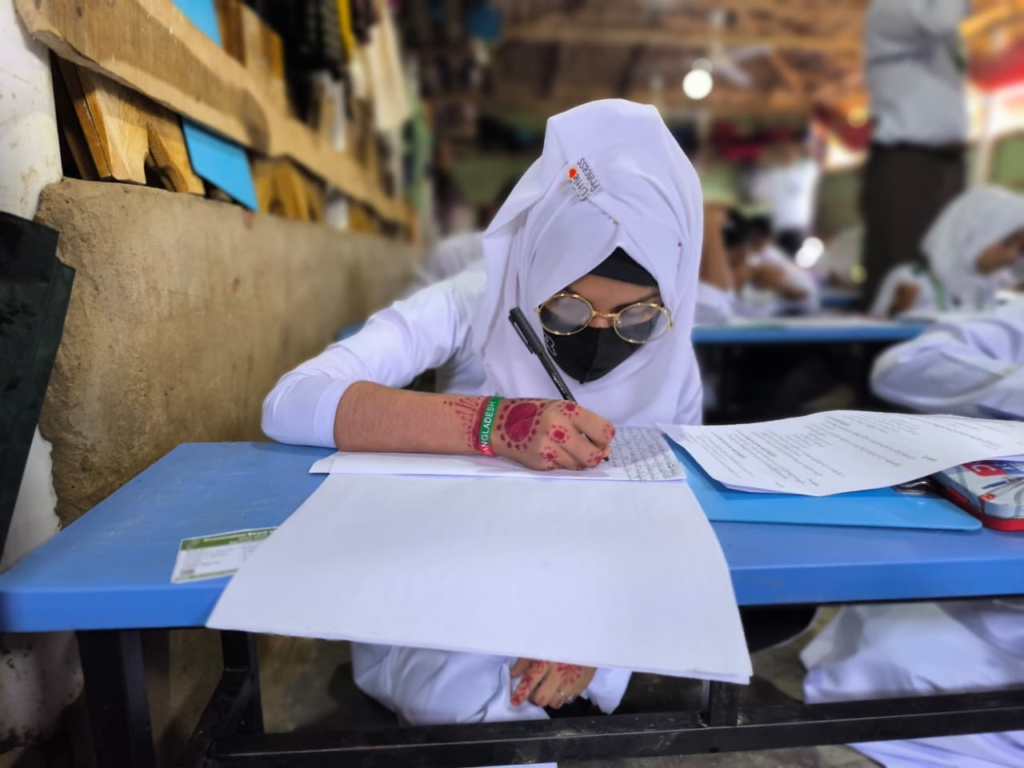
When family duties or illness prevent her from attending school, she worries about missing important lessons.
Jesmaida also struggles with science because lessons require practical experiments, but her school lacks the laboratory equipment needed to conduct them.
Despite these difficulties, she hopes to become a doctor. She believes the Rohingya community needs more female doctors because some women patients may feel uncomfortable receiving medical care from men.
For Jesmaida, reaching that goal requires more than basic classroom lessons. She says students need quality education, practical science classes, financial support for learning materials and guidance from teachers and mentors. Further study and professional medical training would also be essential.
Her experience illustrates how girls can be expected to carry family responsibilities while trying to prepare for demanding professional careers.
Asma Bibi, 15, a Grade 9 student at Wisdom Tree High School, faces a different caring responsibility. She says she sometimes misses school to look after her grandmother, whose health condition requires attention.
Asma enjoys mathematics and English, although she sometimes finds mathematics difficult. She wants to become both a doctor and a teacher.
Her ambition combines two goals: helping people through medicine and educating the next generation. But when family care takes priority, she has less time to attend classes and pursue those dreams.
Asma’s experience highlights the importance of ensuring that girls can continue their education even when family members need care.
Girls who want to serve their community
For other students, educational ambitions are closely connected to the needs they see around them.
Sumaiya, an 11-year-old Grade 5 student at Yadana High School, enjoys science and hopes to become a doctor. She says she helps her mother in the kitchen, carries water from tube wells and goes shopping. These responsibilities sometimes interfere with her school attendance.
She recently missed three days of school while accompanying her father to hospital and caring for him.
Despite these challenges, she remains determined to pursue medicine. She wants to help women in her community, whom she describes as her “sisters and mothers.”
Sumaiya believes access to a computer and guidance from skilled trainers would help her develop the knowledge she needs. Her ambition reflects a desire to use education to serve others, even as daily family responsibilities compete with her studies.
Nur Fatema, a 15-year-old Grade 12 student at REMG, faces financial challenges of her own. She says she sometimes misses class to collect food rations or help her family financially.
She wants to become an engineer, invent things and contribute to her community. But she believes the education available in the camps provides only a basic foundation, with limited opportunities to pursue advanced courses.
The girls have different interests and family circumstances, but their accounts share a common concern: they want to learn, yet the conditions around them can make continuing their education difficult.
Learning science without a laboratory
A recurring concern among the students is the lack of practical learning facilities.
Jesmaida says science is difficult because lessons require practical classes, but the necessary instruments and laboratory facilities are unavailable. Other students who enjoy chemistry and physics describe a similar gap between learning concepts in the classroom and applying them through experiments.
Jannat Ara, a Grade 10 student at Golden Star Community High School, enjoys physics and chemistry. She wants to conduct chemistry experiments but says her school does not have a laboratory where students can put their learning into practice.
She also describes the difficulty of studying in crowded and noisy surroundings. In the camps, noise from people, vehicles and other children can make concentration difficult, particularly for students who have little quiet space at home.
Nur Kolima, a Grade 6 student at the same school, says her shelter is beside a busy market. Noise from people and vehicles makes it difficult for her to concentrate and memorize lessons. She sometimes misses school when she is sick and worries about falling behind.
For girls who want to become doctors, engineers or other professionals in science-related fields, the absence of practical learning opportunities can become a serious obstacle. Their ambitions require not only encouragement but also appropriate facilities, trained teachers and realistic pathways to further education.
What happens after school?
For older students, the uncertainty extends beyond their current classrooms. They also worry about whether they will be able to continue their education after completing their present studies.
Sofia Akter, an 18-year-old Grade 11 student at Golden Star Community High School, enjoys biology and hopes to become a doctor. She says the community needs more doctors, but the lack of laboratory equipment and access to professional medical courses limits students’ preparation.
She also raises concerns about educational certificates. According to Sofia, certificates issued through community-based education may not be recognized by institutions outside the camps, making it difficult for students to demonstrate their qualifications when applying for further study.
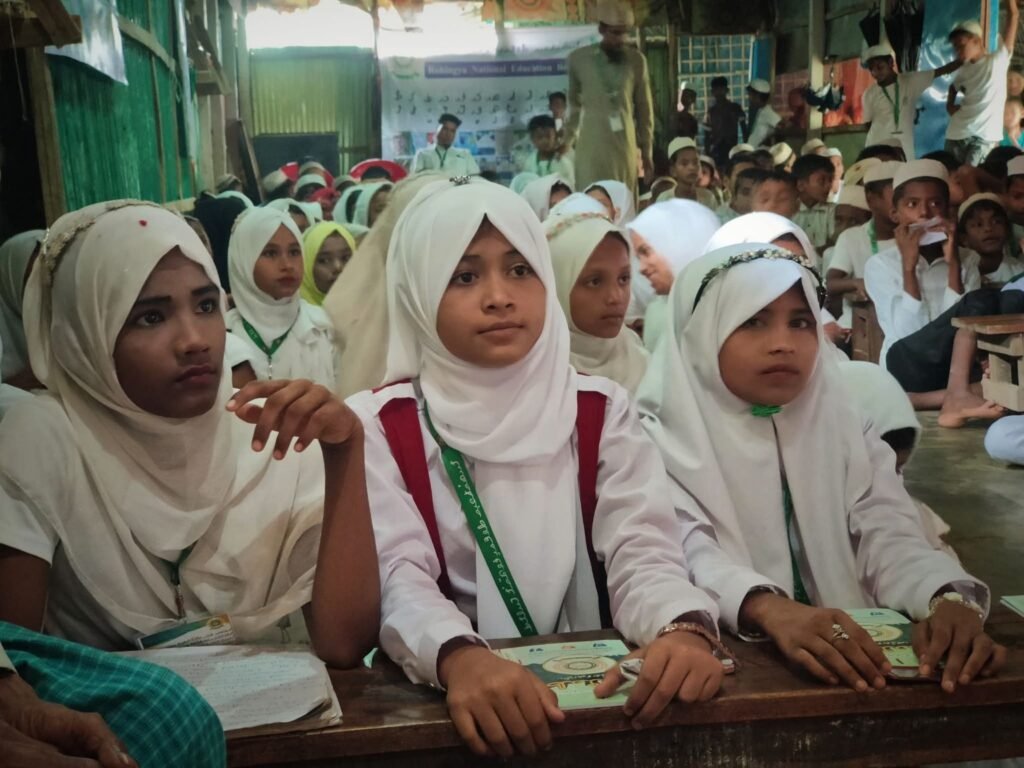
She hopes education agencies and relevant authorities, including UNHCR and UNICEF, will help students obtain recognized certificates and access higher education.
These concerns cannot be resolved by individual teachers or schools alone. Educators can support students and maintain classrooms, but they cannot independently guarantee recognition of qualifications or create university and professional training opportunities.
For girls who have spent years studying despite difficult circumstances, uncertainty about the future value of their education can be discouraging. Recognized learning pathways and opportunities for further study are central to their hopes for the future.
Protecting girls’ education requires collective action
The experiences of Sumaiya Akter and Rozia Akter show how women educators are helping sustain community-based schools despite limited resources. Their work creates opportunities for girls to learn, develop confidence and imagine futures beyond their current circumstances.
The students’ accounts also show that keeping schools open is only one part of protecting girls’ education. Girls need time to study, support with household responsibilities, suitable classrooms, learning materials, practical science facilities and opportunities to continue their education.
Families and communities can help by encouraging girls to remain in school and sharing household responsibilities more fairly. Educators need training and resources to deliver effective lessons. Relevant authorities and education agencies need to address the barriers surrounding recognized qualifications and access to further study.
The girls interviewed for this story have described what would help them: laboratory equipment, computers, financial assistance, supportive teachers, better study environments and opportunities for higher education.
Their ambitions differ. Some want to become doctors who can serve women patients. Others want to teach or become engineers. What connects them is their determination to use education to contribute to their community.
Women educators are helping keep learning opportunities alive, while girls continue to pursue their ambitions despite the barriers around them. Their efforts deserve attention and meaningful support. But protecting girls’ education cannot depend on determination alone. It also requires the resources, recognition and opportunities that allow that determination to become a future.
About the Author
Hafizur Rahman, also known as RB Hafizu, is a Rohingya journalist, writer, human rights defender and multimedia storyteller based in Cox’s Bazar, Bangladesh. He writes for Rohingya Khobor, Rohingyatograher, RPS and RYAN Website and reports on Rohingya communities, human rights, women’s issues, education and humanitarian challenges. His work aims to amplify underrepresented voices and document the experiences, struggles and resilience of the Rohingya people.