
By Ro Mohammed Ridowan
Cox’s Bazar, Bangladesh
On 1 April 1998, I was born in Nat Chaung—a village known to our elders as Garator Bill—nestled in Northern Maungdaw Township of Arakan State, Myanmar. For generations, our roots were anchored in that soil. But in August 2017, the world we knew ceased to exist.
The Myanmar military unleashed a campaign of calculated brutality: villages torched, families slaughtered, and an entire people targeted for erasure. Like hundreds of thousands of others fleeing genocide and systematic violence, my family abandoned our home, our land, and our physical history. We crossed the border into Bangladesh with nothing but the clothes on our backs and the trauma etched into our memories.
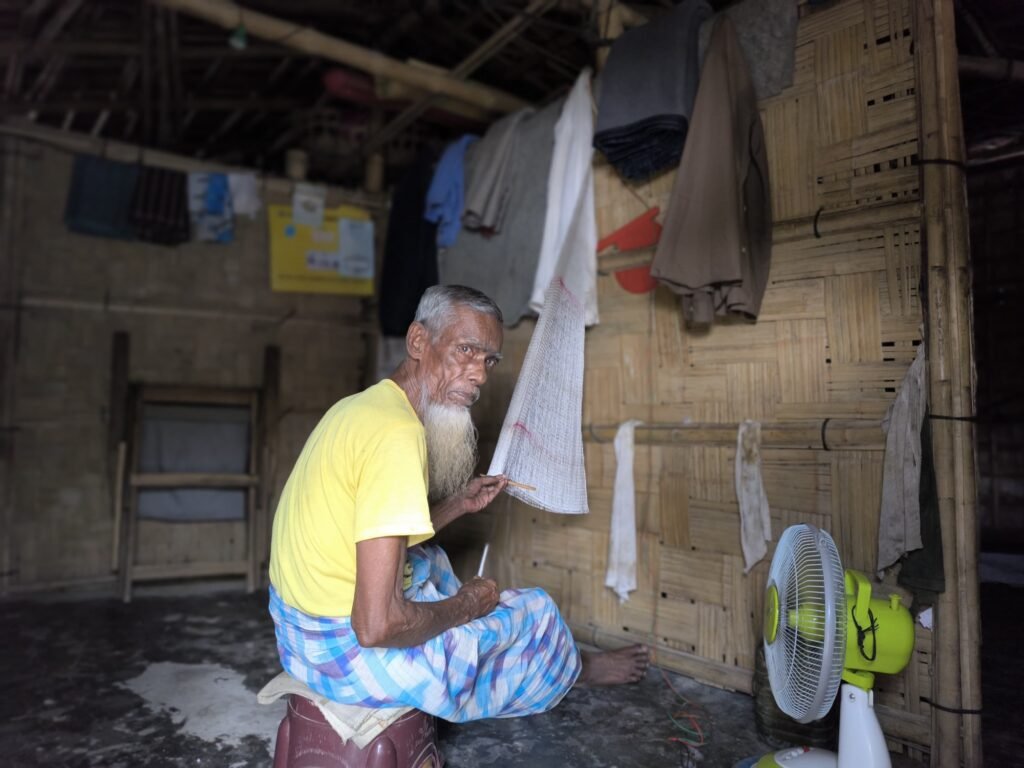
Today, I live alongside nearly 1.3 million displaced Rohingya in the sprawling refugee settlements of Cox’s Bazar. While we escaped immediate slaughter, exile brought its own quiet war—a daily struggle against statelessness, systemic neglect, eroding rations, and the crushing absence of basic civil rights.
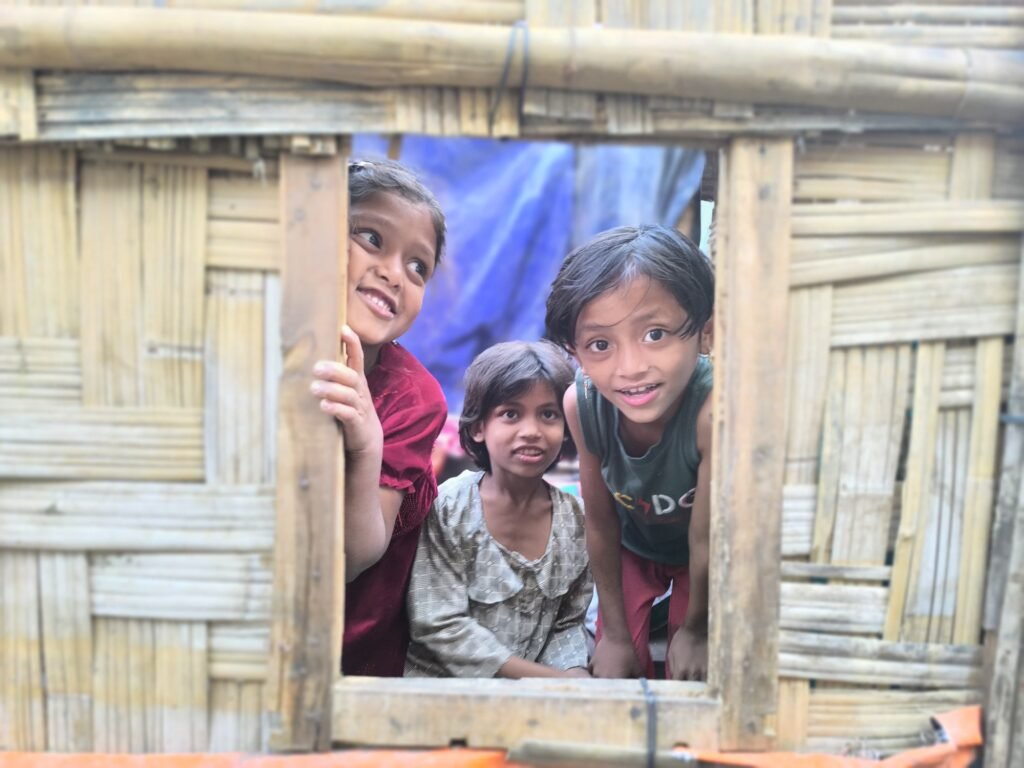
Ridowan describes that Yet within these bamboo-and-tarpaulin shelters, our story did not end. It merely demanded new witnesses.
Finding the Frame: From Aid Worker to Visual Chronicler
My transition into storytelling grew out of frontline service. In December 2017, shortly after arriving in the camps, I began working as a community volunteer and humanitarian worker. Over the years, I collaborated with international organizations including Action Against Hunger (ACF), Christian Aid (CAID), CARE Bangladesh, and the International Organization for Migration (IOM), primarily focusing on site management, logistics, and grassroots coordination.
These roles gave me an intimate understanding of the humanitarian machinery. More importantly, they placed me face-to-face with the immense dignity of our people under duress: mothers shielding infants from monsoon landslides, elders quietly keeping our spoken language alive, and children fashioning makeshift toys out of plastic wire.
By 2021, a troubling reality had become undeniable: the world was moving on. International headlines were fading, foreign delegations grew sparser, and the Rohingya crisis was being reduced to an occasional footnote.
I refused to let our living history become invisible.
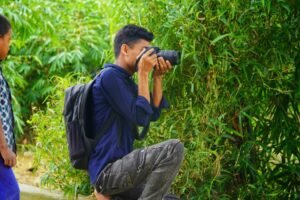
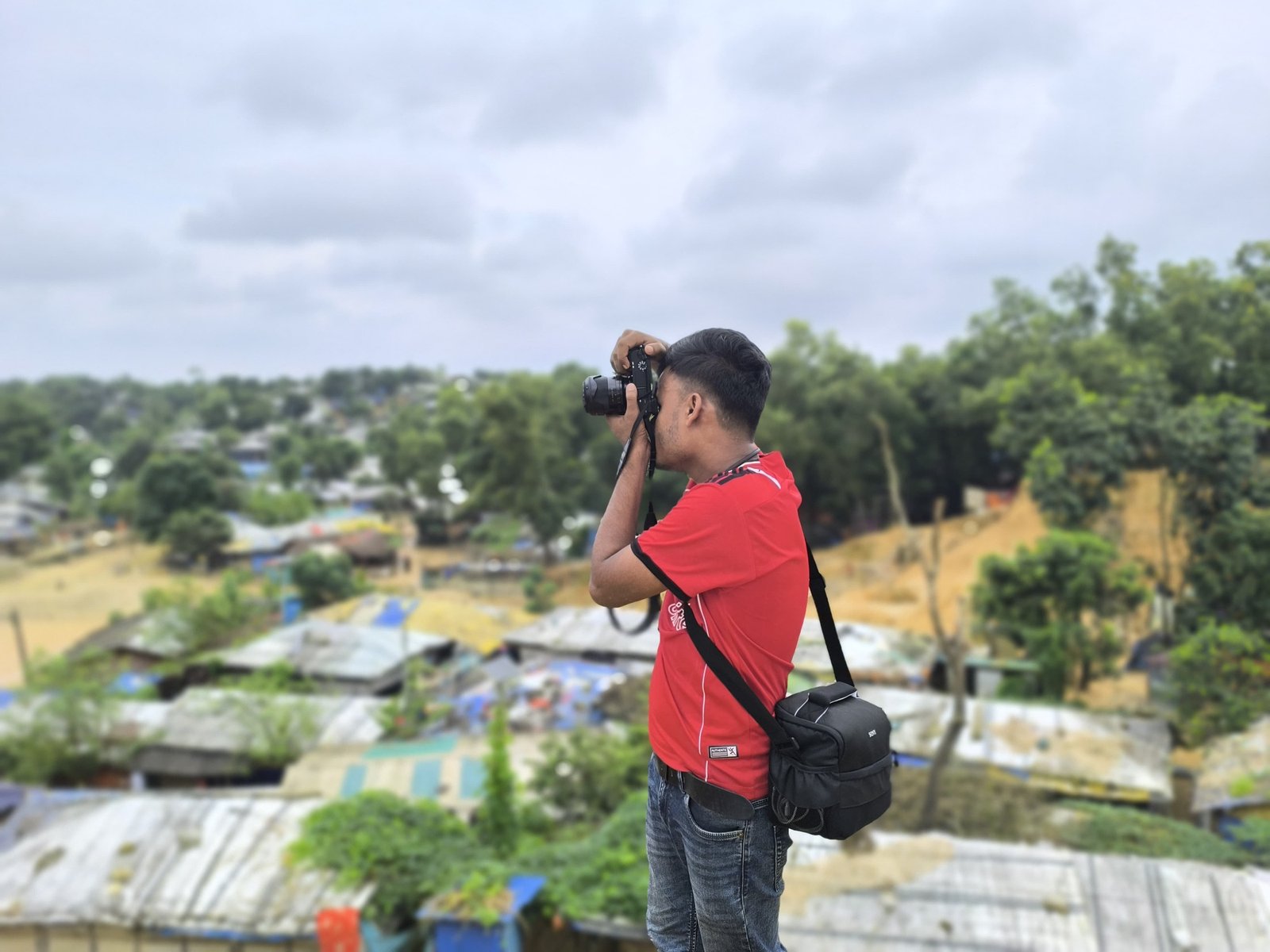
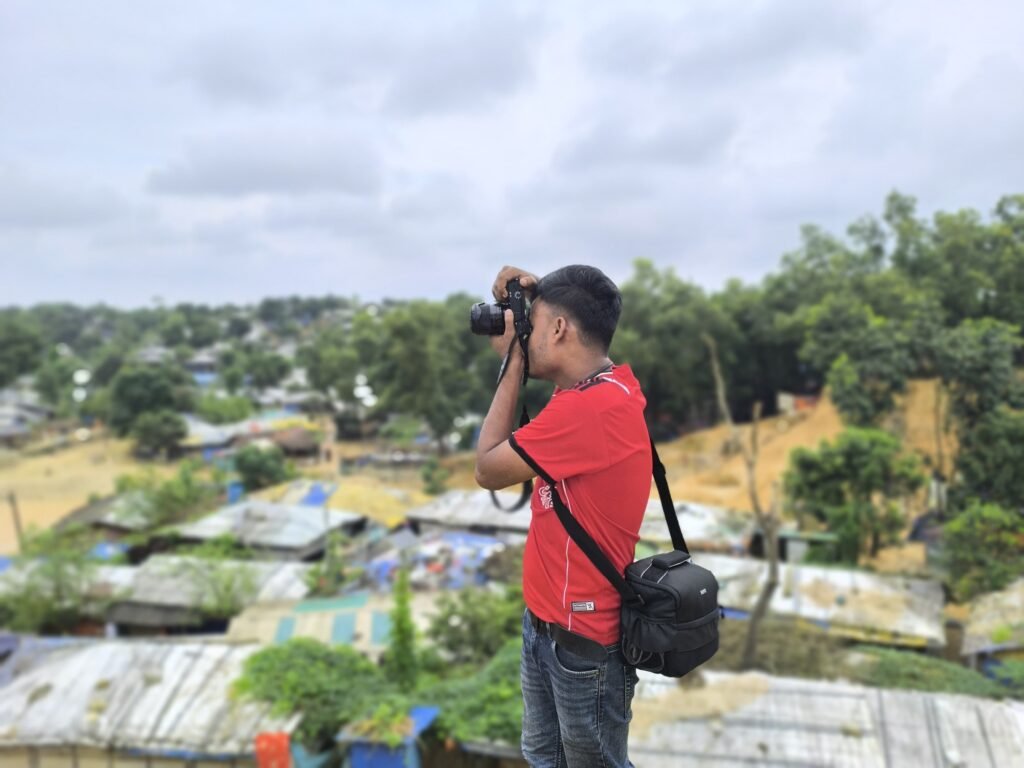
Armed with nothing more than a basic Android smartphone, I began documenting camp life. I launched visual dispatches across social media, conducted independent field research, and joined the Rohingya Photographic Society (RPS). Concurrently, I stepped into formal journalism as a reporter, photographer, and translator for the Arakan News Agency (ANA).
A mobile lens may lack expensive glass, but it carries complete truth when held by someone living the reality behind the shutter.
More Than Victims: The Scope of the Work
Too often, external coverage portrays the Rohingya through a one-dimensional lens of helpless misery. While my lens does not shy away from agony, my visual journalism is driven by a broader imperative: preserving identity, agency, and cultural continuity.
My reporting focuses on four core fronts:
- Protracted Camp Realities: The quiet endurance required to survive chronic ration cuts, fires that tear through crowded blocks in minutes, and monsoon seasons that threaten to wash fragile shelters down mud slopes.
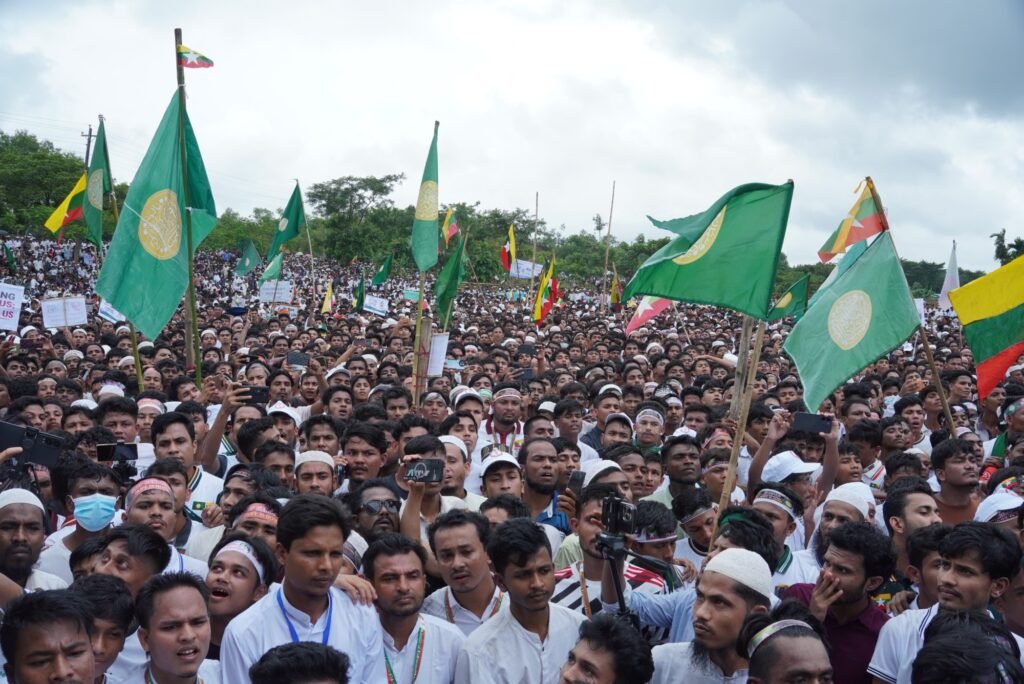
- The Dual Front of Persecution: Documenting the ongoing catastrophe back home in Arakan State, where civilians remain trapped between atrocities committed by the Myanmar military and intensifying attacks by the Arakan Army (AA).
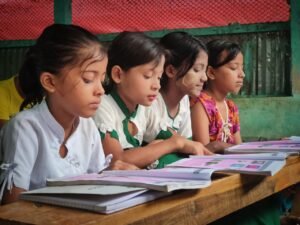
- Cultural and Generational Preservation: Recording the oral histories of community elders who carry the sole remaining memories of our ancestral land, and the unyielding drive of children seeking informal education against all odds.
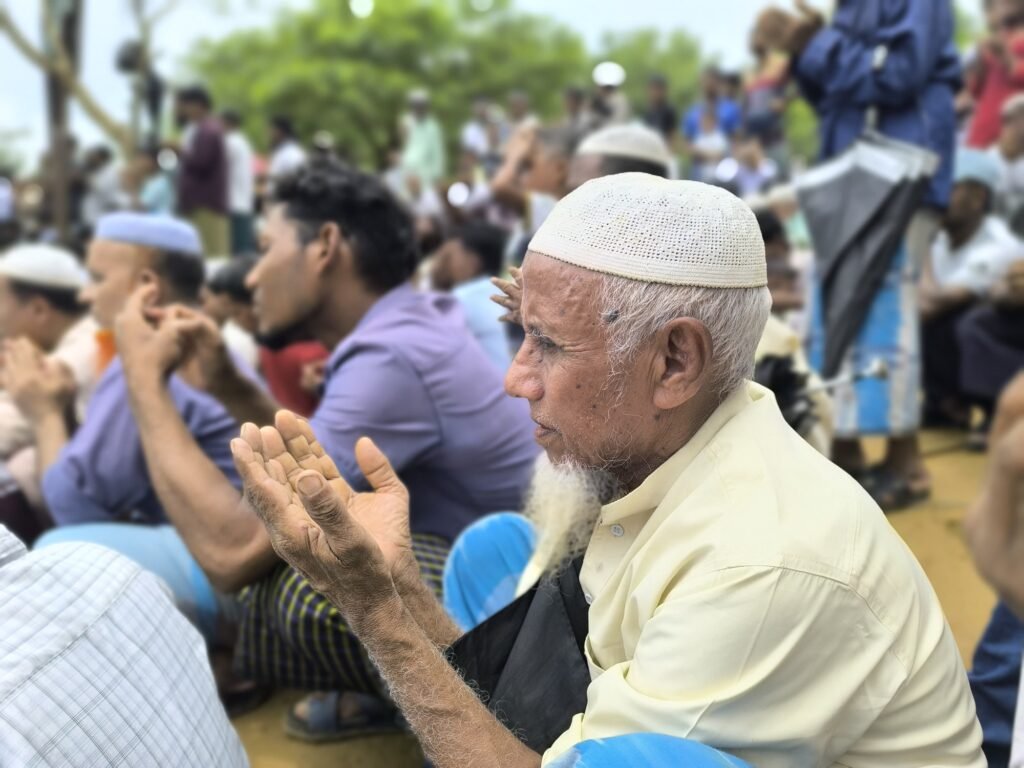
- Human Dignity and Community Care: Showcasing the everyday acts of solidarity—community-built drainage ditches, volunteer firefighting brigades, and communal prayer—that keep our social fabric intact.
“Photography is not merely aesthetic expression; it is forensic memory. In an era where perpetrators deny the crimes committed against us, an archive of visual evidence serves as a bulwark against denialism.” Ridowan added
The Cost of Truth-Telling Behind Barbed Wire
Documenting camp life from the inside comes at a severe price. As a refugee photojournalist, the obstacles are systemic and unending:
- Resource Scarcity: Operating without institutional funding means contending with cracked phone screens, failing batteries, unreliable electricity, and spotty internet connectivity that turns uploading a single dispatch into an hours-long ordeal.
- Operating in the Shadows: Navigating strict administrative curfews, movement restrictions, and the persistent threat of surveillance or censorship demands constant vigilance. Documenting human rights abuses carries real security risks for both the storyteller and the subject.
- The Emotional Toll: Unlike foreign correspondents who parachute in for a week and fly home to safety, I cannot walk away from the story. The mother mourning her child in my photograph is my neighbor; the family watching their shelter burn is living three alleys down from mine. Bearing witness to relentless suffering while feeling the world’s indifference leaves deep, invisible scars.
“Yet silence is a luxury we cannot afford. When an entire identity is under assault, documentation becomes an act of defiance.” Says Ridowan
The Crisis Is Not Over
The international community must confront an urgent truth: the Rohingya crisis did not conclude in 2017.
Inside Myanmar, those who remain continue to face apartheid conditions, forced conscription, and violence. In Bangladesh, over a million people remain confined behind barbed wire fences without citizenship, legal rights to work, or accredited higher education. We are caught between an unsafe homeland and an unsustainable exile.
My journey began with a cracked smartphone, but the mission remains boundless: to force the world to look us in the eye.
Our stories deserve to be heard. Our culture deserves to be preserved. Our rights deserve to be restored. And our future deserves hope.