

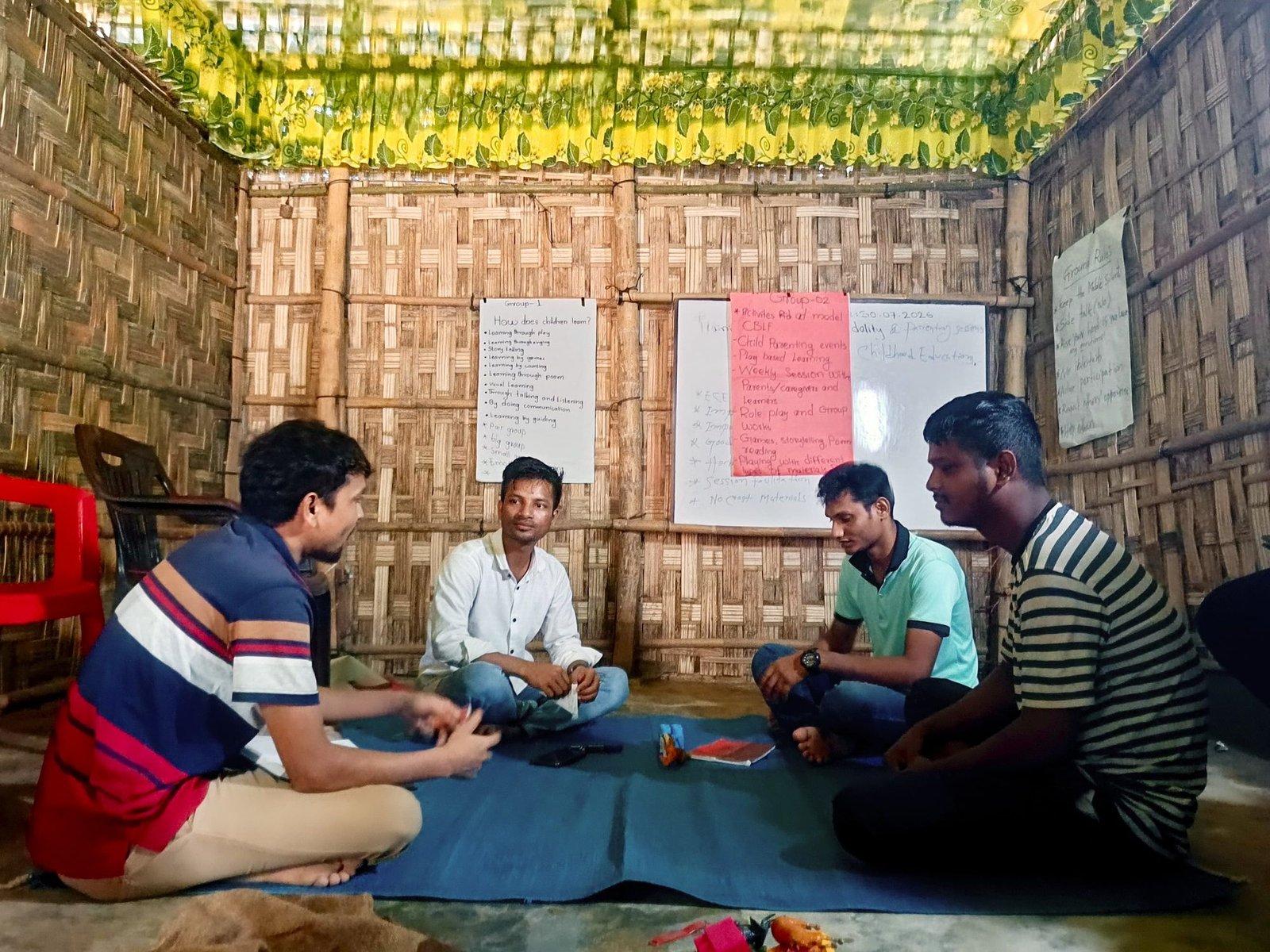
From Rakhine State, Myanmar, to life in exile in Bangladesh: a journey of survival, learning, professional growth, creative expression, and commitment to the Rohingya people.
By Maung Emdadul Hasan
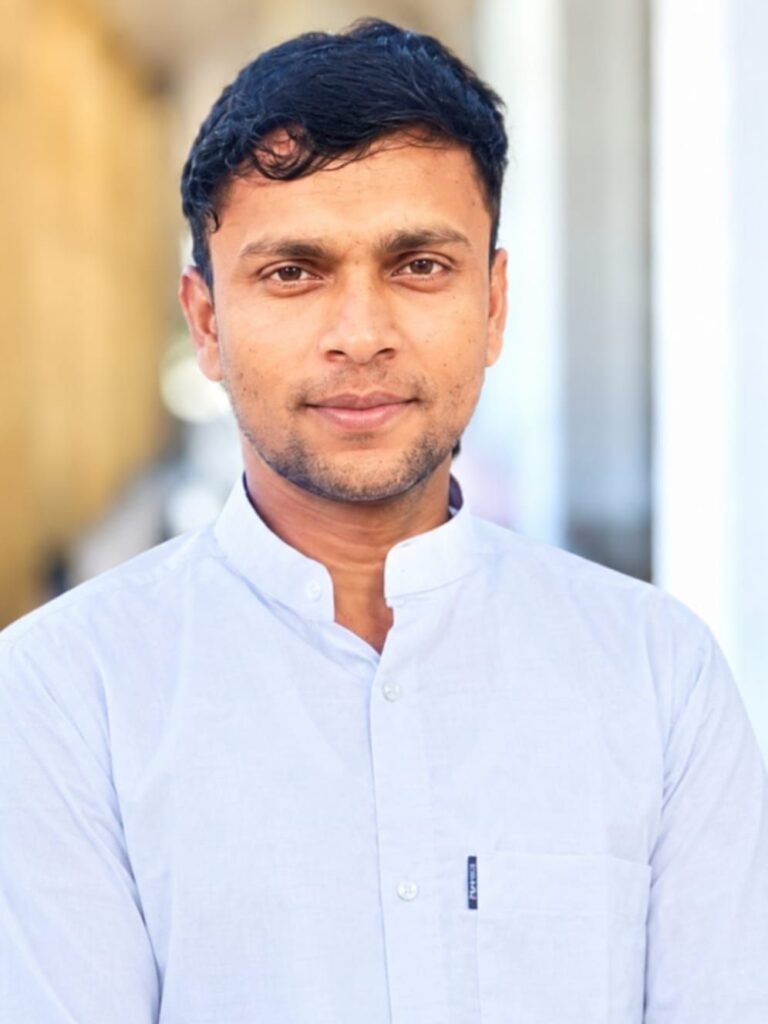
A Life Shaped by Displacement, Memory, and Determination
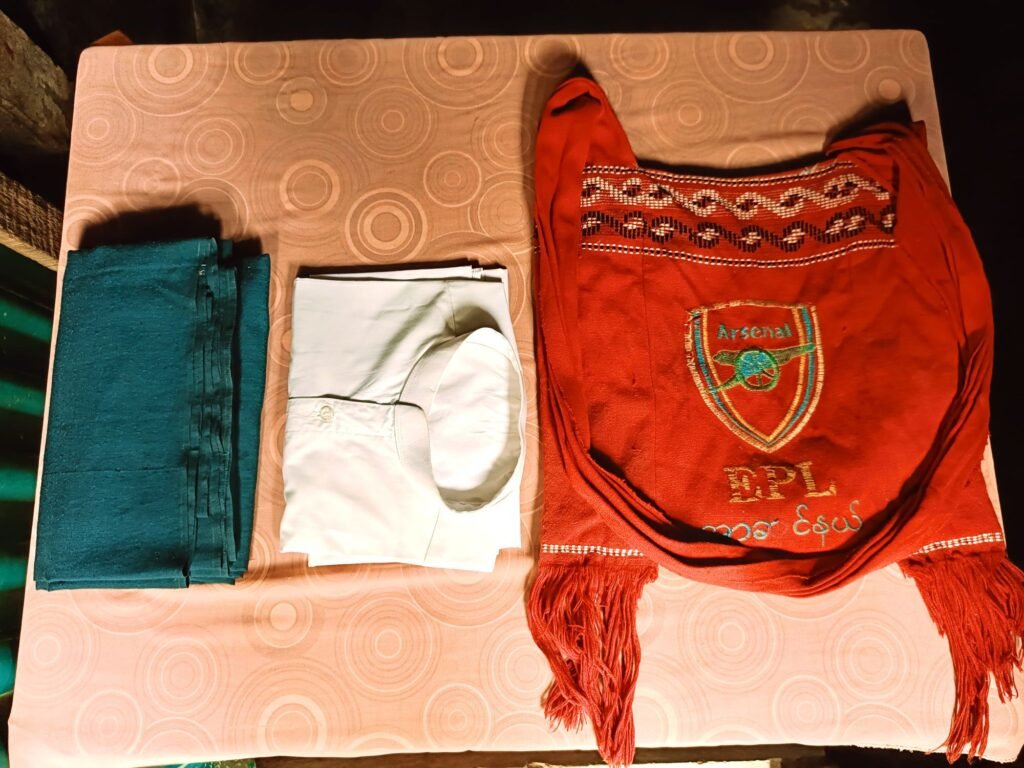
At sixteen, Maung Emdadul Hasan left behind far more than his home. In 2017, as violence swept through Rohingya villages, he fled Playdaung Village in Buthidaung Township, Rakhine State, Myanmar. He carried the belongings of an ordinary schoolboy: a white school shirt, a green longyi, and a red handwoven schoolbag. On the difficult journey to Bangladesh, the bag held food, including biscuits, that helped him endure the flight. Possessions once tied to school and childhood became companions on a journey that changed the course of his life.

Nearly a decade later, Hasan still keeps these belongings. They remind him of the life he knew before displacement: his education, his cultural identity, his childhood, and his bond with his ancestral homeland. The shirt recalls a student whose schooling was cut short by violence. The longyi reflects his cultural heritage. The schoolbag recalls the journey on which familiar objects became tools of survival. In his own words:
“I left Myanmar as a sixteen-year-old student, carrying my school shirt, my green longyi, and my red handwoven schoolbag. I never imagined that these ordinary belongings would become some of the most important witnesses to my childhood and the life I was forced to leave behind. I have lost my home, but I do not want to lose my history, my identity, or my hope.”
For Hasan, these belongings link the person he was in Myanmar to the person he continues to become in Bangladesh. They also reflect a wider Rohingya experience, in which everyday objects, family memories, language, and clothing take on deep meaning once people are forced from their homes.
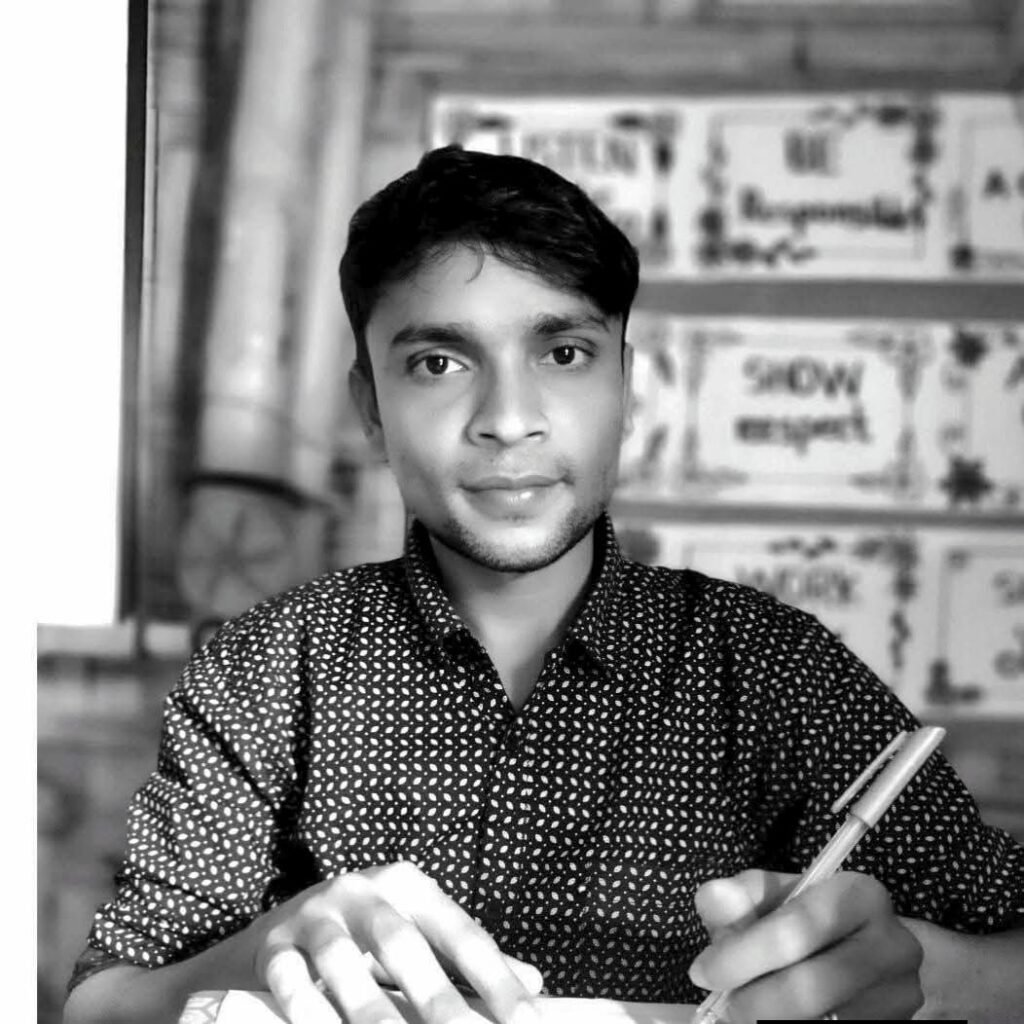
Maung Emdadul Hasan is a Rohingya writer, researcher, poet, photographer, storyteller, educator, and human rights advocate from Khin Tharmar Playdaung, Buthidaung Township, Rakhine State, Myanmar. His public profile is available on Facebook. Since August 2017 he has lived in Kutupalong Refugee Camp 3 in Cox’s Bazar, Bangladesh. Displacement has shaped his life and career, but his work shows a sustained commitment to education, research, creative expression, cultural preservation, and community service.
His journey cannot be separated from the wider history of the Rohingya, a people who have endured decades of persecution, discrimination, restrictions on fundamental rights, statelessness, and repeated displacement. The consequences go beyond lost homes and possessions. They affect education, livelihoods, professional development, family security, cultural continuity, and the ability to plan for the future. For many young Rohingya, displacement means entering adulthood without the stability and opportunities that others take for granted.
Yet Hasan’s biography is not defined by suffering alone. It is also a story of determination, continuous learning, and professional responsibility. His experience shows that forced displacement does not erase a person’s knowledge, ambitions, or right to contribute to society. Even under the restrictions of refugee life, he has continued to teach, study, interpret, research, write, photograph, and support community initiatives.
In August 2017, Hasan was a matriculation student in Myanmar. Like hundreds of thousands of other Rohingya who sought safety in Bangladesh during that period, he arrived in an unfamiliar place where survival and immediate needs took priority over the plans he had made for his future.
Since then, he and his family have lived through the realities of displacement while receiving support from the people and government of Bangladesh. Over the years he has seen both acts of generosity and the enormous difficulties facing refugee families: children struggling to reach education, young people searching for meaningful work, and families trying to keep their dignity amid limited resources and uncertainty.
Building a career in a refugee camp takes persistence, adaptability, and the will to keep developing one’s skills when opportunities are limited.
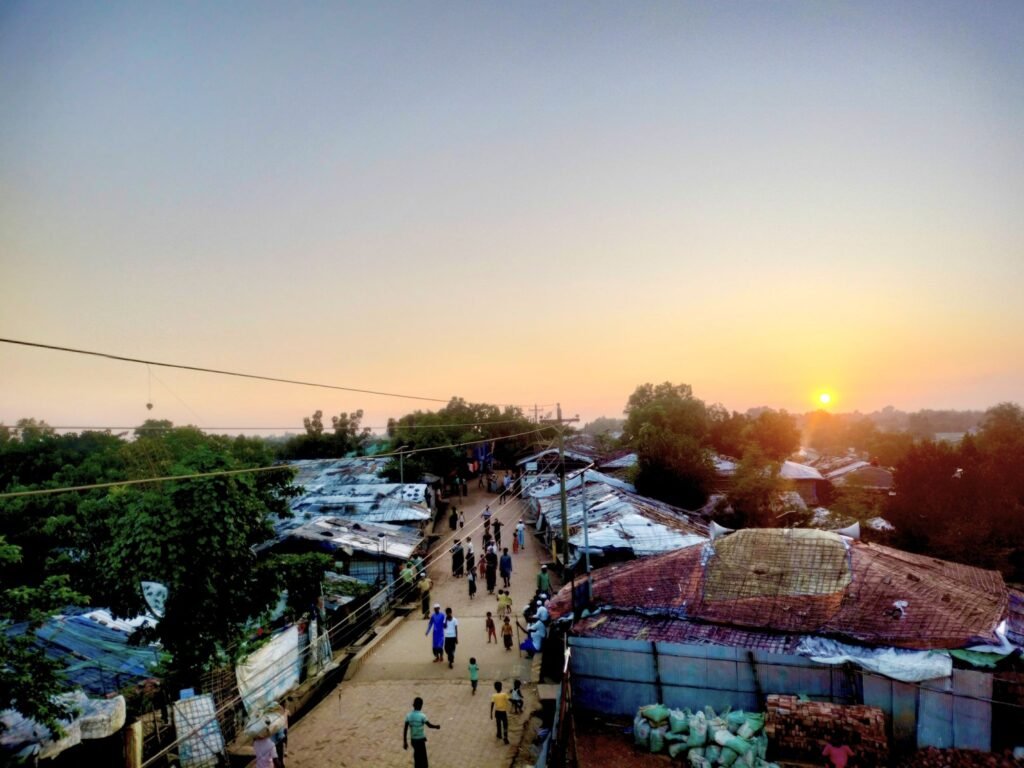
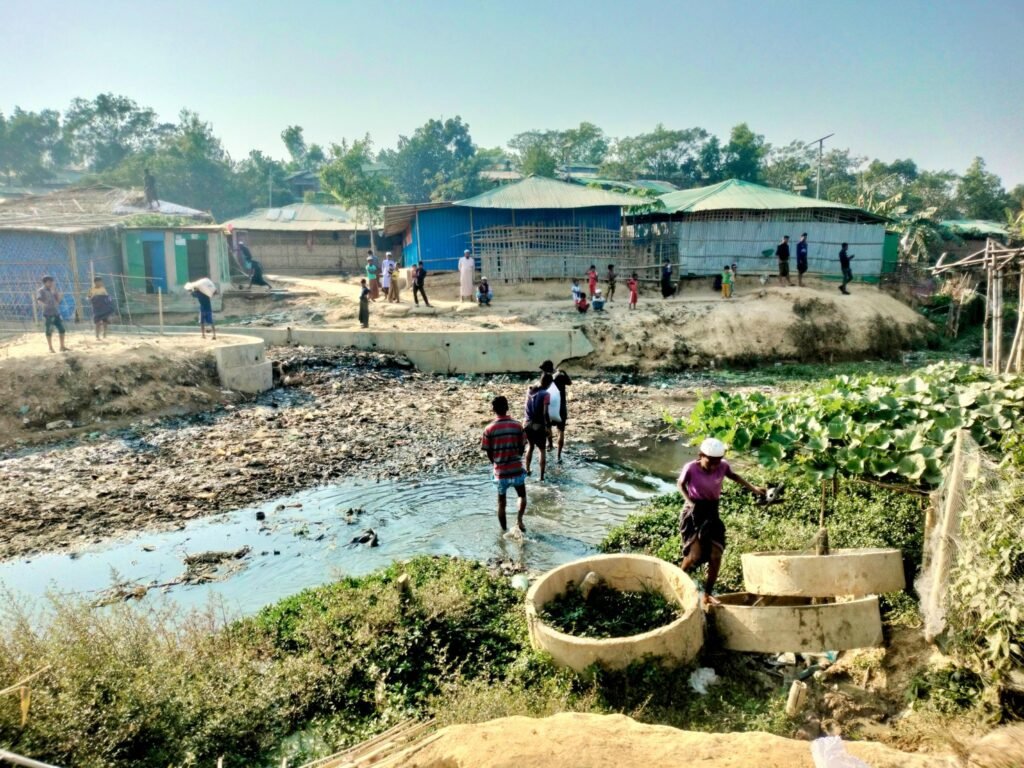
These experiences have deepened his understanding of inequality, education, human rights, and social responsibility. His work rests on a conviction: Rohingya people should be recognised not only for what they have endured, but also for the knowledge they hold, the contributions they make, and the futures they continue to imagine.
Education, Professional Development, and Community Service
Education is one of the central foundations of Hasan’s personal and professional life. Forced displacement interrupted his formal schooling in Myanmar, but it did not end his desire to learn. He has continued through online education, professional training, practical experience, research, and community-based learning.
For Hasan, education is more than a qualification or a route to employment. It builds confidence, deepens understanding of the world, and expands what a person can offer a community. As he explains:
“For me, education is a journey that does not end when formal schooling is interrupted. Every training, every research experience, every classroom, and every conversation with community members teaches me something new. I want to keep learning, strengthen my abilities, and use what I learn to create better opportunities for Rohingya children and young people.”
In 2024 he completed a diploma in Scientific Research Methods, together with a course in Science and Research Ethics, through the Rohingya Academic Research Institute. These studies strengthened his interest in systematic inquiry, evidence-based documentation, and the ethical responsibilities of researching with individuals and communities. They also supported his development as a research assistant and writer, particularly in work involving interviews, community perspectives, and the responsible interpretation of information.
In 2026 he received a scholarship to pursue a Bachelor of Business Administration at the University of the People. Business administration offers knowledge in management, leadership, planning, resource mobilisation, and institutional development. For Hasan, higher education is both a personal ambition and a way to strengthen his capacity to contribute to community initiatives and professional settings. He also continues to take online training and other courses.
Practical experience, collaboration with colleagues, listening to community members, conducting interviews, facilitating learning activities, and reflecting on daily challenges have all shaped how he sees the world. His work with children, teachers, caregivers, and community members has taught him that meaningful education is more than delivering information. It means encouraging curiosity, building confidence, adapting methods to local conditions, and creating spaces where learners take an active part.
Hasan has built practical experience with humanitarian organisations, international and local NGOs, schools, and community-based programmes. His responsibilities have included educational programming, teacher support, training, classroom facilitation, community engagement, research assistance, interpretation, and documentation.
An important stage of his career was his work with Plan International Bangladesh. For about two years he served as a Programme Organizer, supporting more than 50 Rohingya female trainee teachers with the support of UNICEF. The role deepened his understanding of educational programming, teacher development, community participation, and the importance of supportive learning environments for women and girls.
He then worked for about two and a half years as a Resource Instructor under the Myanmar Curriculum Education programme, again with Plan International Bangladesh and the support of UNICEF. He contributed to teacher capacity building and to educational activities for Rohingya learners whose access to formal schooling had been disrupted by displacement. The work gave him practical experience in learning facilitation, training, and leadership, and in the value of culturally and linguistically appropriate education.
Hasan also worked for about six months as a Master Trainer with YPSA (Young Power in Social Action), supported by the Norwegian Refugee Council (NRC). The role further developed his skills in facilitation, training, participant engagement, and capacity development, and strengthened his ability to share knowledge and support practical learning.
He currently works as a Master Trainer with Mukti Cox’s Bazar, in programmes supported by UNICEF and the World Bank. His work includes supporting educational activities, building the capacity of facilitators and caregivers, and contributing to community-based learning. A key area is the Early Childhood Education Model Community-Based Learning Facility in the camps.
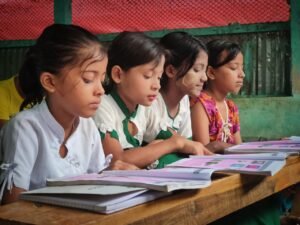
The initiative promotes play-based learning, caregiver participation, child-friendly methods, and the use of locally available materials. Children learn through activities with shapes, animals, and basic concepts such as big and small or long and short. Caregivers are supported to make simple learning materials from what they have and to take a more active part in their children’s learning.

These approaches matter where educational resources are scarce and families need practical, affordable ways to support early childhood development. It reflects his belief that the quality of learning depends not only on funding but also on creativity, community participation, good guidance, and the commitment of those who support children.
Alongside his training work, Hasan serves as Director and Tutor at New Dawn Basic Education Middle School in Kutupalong Refugee Camp, where nearly 400 students study from Grade 1 to Grade 9. He has also taught at Full Moon Basic Education High School, which serves nearly 600 students from Grade 1 to Grade 12 in the same camp area.
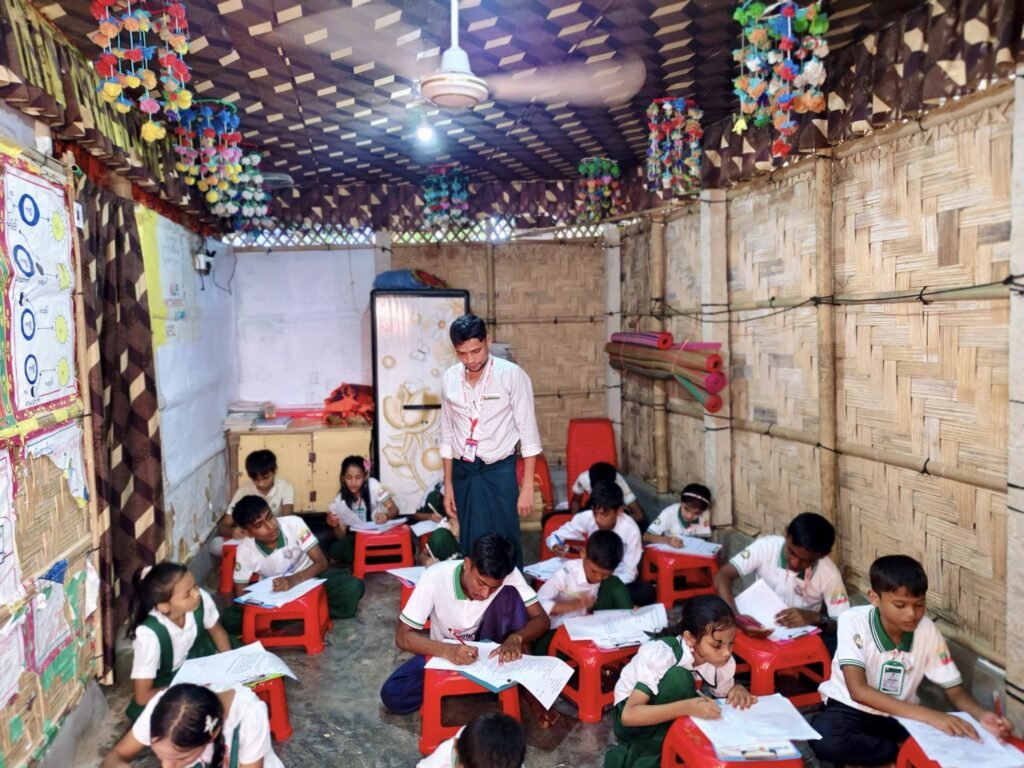
These roles have let him contribute directly to children’s education while building his communication, classroom facilitation, student engagement, and organisational skills. Teaching has reinforced his belief that education should help students develop confidence, curiosity, independent thinking, and a sense of their own potential. For Rohingya children growing up amid displacement and uncertainty, supportive schools provide a place to learn, form relationships, keep their aspirations, and imagine possibilities beyond their immediate circumstances.
Across all these roles he has faced limited resources, demanding conditions, and competing responsibilities, and has had to adapt activities to local realities. These challenges have strengthened his patience, flexibility, teamwork, and commitment to community development.
Interpretation, Research, and Rohingya Self-Representation
Language and communication are central to Hasan’s professional identity. He interprets between English and Rohingya and between English and Burmese in humanitarian and research settings, supporting communication among Rohingya community members, researchers, humanitarian professionals, and other stakeholders. His work has supported field interviews, data collection, evaluations, workshops, and community engagement.
For Hasan, interpretation is far more than translating words. It requires attention to meaning, context, tone, cultural differences, and the circumstances in which people speak. In research, accurate interpretation helps participants describe their experiences in their own words and helps researchers understand them without distortion. In humanitarian work, it helps community members raise concerns, understand information, and take part in decisions that affect their lives.
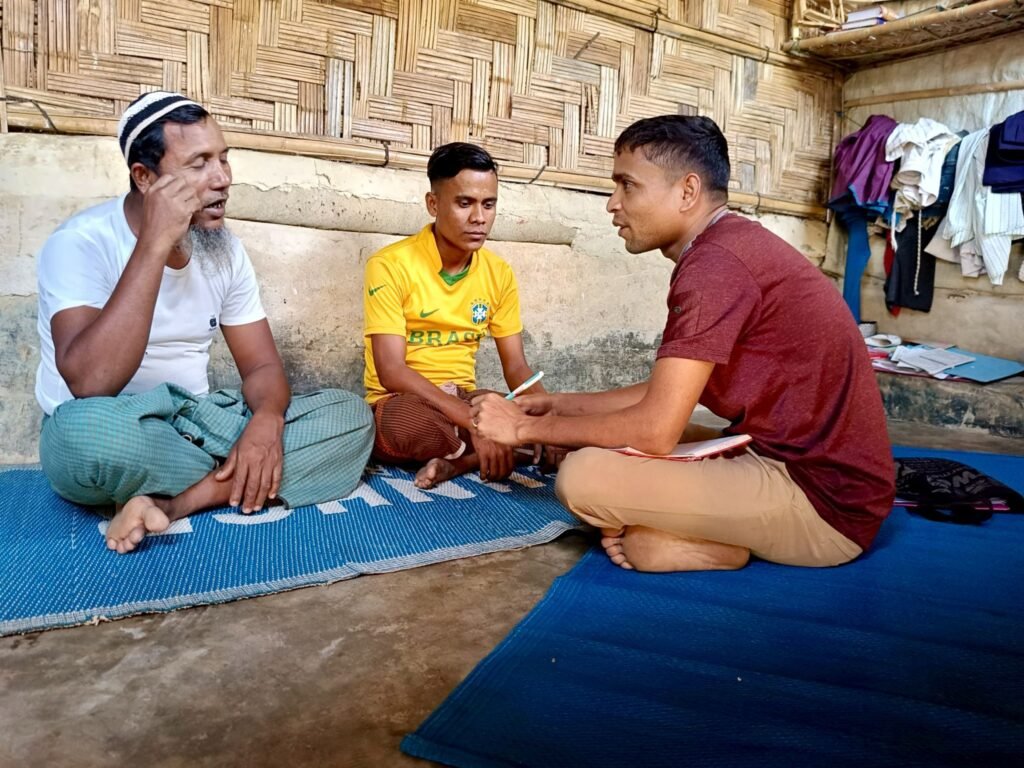
He holds himself to ethical standards of accuracy, impartiality, confidentiality, and respect for the people whose words he conveys, especially in sensitive discussions about displacement, protection concerns, family experiences, and human rights. His experience has also taught him how language, power, and participation are linked: when people cannot communicate effectively, their experiences may be misunderstood or left out of decisions. Interpretation across linguistic and cultural boundaries helps make research and humanitarian engagement more inclusive.
These experiences connect to Hasan’s growing interest in research. His areas of interest include qualitative methods, community perspectives, displacement, statelessness, identity, education, human rights, and the representation of Rohingya experiences. He believes research should do more than collect information: it should recognise participants’ knowledge, protect their dignity, respect their experiences, and present findings responsibly.
One of his major projects examined the development of Rohingya storytelling and self-representation. It combined a survey of 250 respondents using 27 questions, 45 in-depth interviews, social media data, and a mapping of organisations and initiatives working in Rohingya storytelling, photography, research, journalism, education, and art. The research looked at how Rohingya people, especially young people, document their lives and share their perspectives through creative and research-based work. It examined motivations such as human rights advocacy, recording everyday life, personal interest, educational development, and preserving community memory, and the forms of expression involved, including photography, video, documentary work, journalism, and educational activities. Bringing these sources together, the project aimed to understand both the opportunities and the challenges facing Rohingya storytellers.
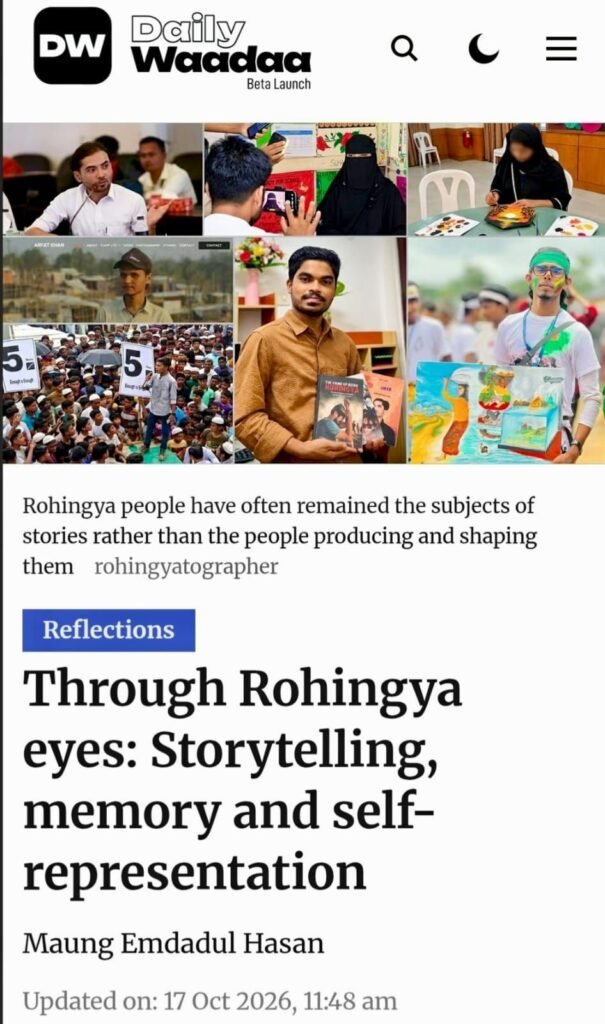
The project became the foundation of Hasan’s article Through Rohingya Eyes: Storytelling, Memory and Self-Representation, published by Rohingyatographer. In it, he connected individual experiences to wider questions of representation, cultural memory, and community-led documentation.
His research reflects a broader concern about displaced communities in academic and humanitarian knowledge production. Rohingya people are discussed constantly in reports, policy papers, studies, and news coverage, yet the people behind those accounts do not always have comparable opportunities to conduct research, publish findings, interpret evidence, or influence how their communities are represented. Hasan challenges this imbalance by insisting that Rohingya people are not merely subjects of research. They are also researchers, interpreters, educators, writers, photographers, artists, and producers of knowledge, and their lived experience, language, and cultural understanding can enrich academic research, humanitarian practice, and public debate.
He values qualitative research because it lets people describe their experiences in their own words and reveals the meanings they attach to events, the choices they make under pressure, and how they understand their identities and communities. Such work demands careful attention to consent, confidentiality, accuracy, and the risks participants may face. His work has also included humanitarian documentation and case studies on protection concerns, including housing, land and property issues and the experiences of displaced families. This requires sensitivity and careful handling of personal information, because documentation can affect the safety and dignity of individuals.
Through this work, Hasan has come to value evidence, ethical research, and responsible documentation. His long-term goal is research that is methodologically responsible, academically useful, and meaningful to the communities it documents.
Writing, Poetry, Photography, and Cultural Memory
Writing gives Hasan a way to communicate ideas, preserve memories, document social realities, and challenge incomplete portrayals of displaced communities. His interests include Rohingya identity, displacement, education, human rights, family life, cultural heritage, storytelling, and the right of people to represent themselves. He combines lived experience, research evidence, community perspectives, and accessible storytelling, aiming to explain complex humanitarian issues without reducing people to statistics or presenting them only through suffering.
One of his most significant publications is Through Rohingya Eyes: Storytelling, Memory and Self-Representation. He spent about two months developing it through research, interviews, analysis, and narrative writing. It was edited by Ahtaram Shin and David Palazón and supported by the Global Statelessness Fund.
The article explores how Rohingya photographers, writers, artists, and other creators document their own experiences instead of remaining only the subjects of stories told by outsiders. Its central argument is that Rohingya people already have the right to tell their stories. The challenge is ensuring they have meaningful access to the resources, platforms, professional opportunities, recognition, and editorial independence needed to exercise that right.
Self-representation matters most for communities whose histories have long been narrated by governments, journalists, researchers, and humanitarian organisations. External reporting can document persecution and draw attention to injustice, but it cannot replace the perspectives of those who lived it. The article also stresses the value of preserving everyday experience: a family photograph, an interview with an elder, a record of a community event, or a written memory of childhood can become part of a wider historical archive that helps future generations understand their heritage and resist the loss of memory that displacement causes.
According to the publication information associated with Rohingyatographer, the article was republished by The Daily Waadaa on 17 October 2026. The republication widened its readership and strengthened his motivation to keep documenting Rohingya experiences and advocating for the community’s right to tell its own stories.
His other writing includes The Struggles of Rohingya Families: A Glimpse into Life in the Camps, which addresses the difficulties facing Rohingya families and concerns about child safety in the camps, and Legal Pathways Will Save the Rohingya Lives, published by The Diplomat. Together with essays, reports, research-based articles, and community documentation, these pieces form part of his effort to draw attention to Rohingya rights, displacement, and solutions that protect the community’s dignity and future.
Poetry lets Hasan express what formal research and humanitarian reports often cannot. Through it he explores pain, resilience, identity, memory, loss, and hope, drawing on the experiences of his people: the loss of homeland, the persistence of cultural identity, the struggle for dignity, and the longing to live in freedom and security.
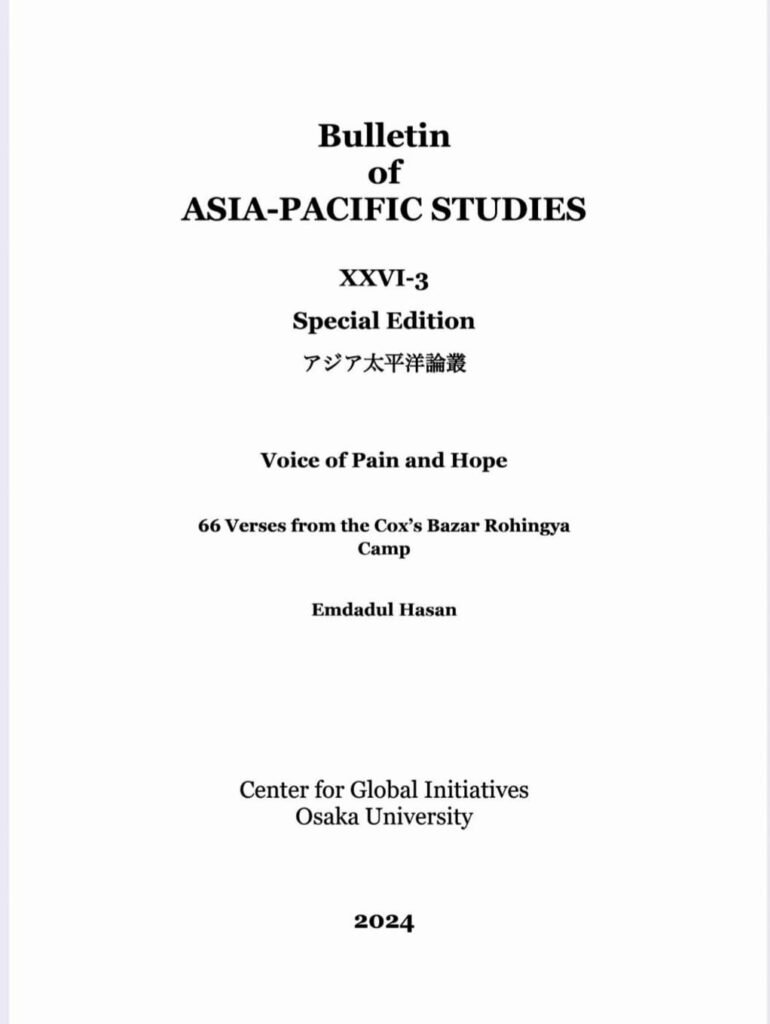
He is the author of Voice of Pain and Hope, a poetry anthology supported by Osaka University in Japan, with editing and a foreword by Takaya Hayashi. The collection is a milestone in his creative journey and reflects his commitment to preserving Rohingya perspectives through literature.
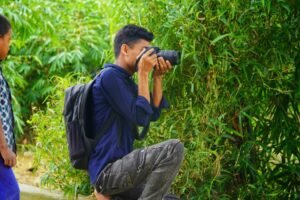
Photography and visual storytelling complement his writing and research. Photographs preserve moments, record changing surroundings, document cultural practices, and convey perspectives that words alone may not capture. For displaced communities, visual documentation can record everyday life, family experiences, community activities, and the realities of living far from home. His own shirt, longyi, and schoolbag show how personal memory becomes historical evidence: objects that look ordinary to others can carry extraordinary meaning for the person who has kept them.
Through writing, poetry, photography, and research, Hasan contributes to a record of Rohingya life that includes not only suffering and injustice but also creativity, knowledge, cultural continuity, professional aspirations, and the determination to build a future.
Human Rights, Professional Opportunity, and the Future of Rohingya Participation
Hasan’s work as educator, researcher, writer, poet, photographer, interpreter, and advocate is united by a concern for the dignity and rights of displaced people. Humanitarian assistance, while essential, cannot by itself fulfil the aspirations of a community that wants to learn, work, create, participate, and shape its own future.
He is particularly concerned about the barriers facing skilled and experienced Rohingya refugees who seek meaningful employment. Many in the community have educational backgrounds, language skills, technical abilities, and professional experience, yet opportunities for advancement remain limited, and some qualified people are confined to volunteer positions despite being able to take on more specialised responsibilities. Article 23 of the Universal Declaration of Human Rights recognises everyone’s right to work, to choose employment freely, and to enjoy just and favourable working conditions.
For Hasan this is not only a matter of individual careers. Meaningful employment supports dignity, independence, professional confidence, and community development, and it strengthens humanitarian programmes and research by drawing on the experience of the people whose lives those programmes aim to improve. As he puts it:
“Rohingya people are not merely subjects of humanitarian reports or recipients of assistance. We are researchers, writers, educators, photographers, interpreters, and storytellers. We already have the right to tell our own stories, preserve our history, and contribute our knowledge. What we need are meaningful opportunities, recognition, and the freedom to participate as equals.”
His commitment to self-representation also connects to Article 19 of the Universal Declaration of Human Rights, which protects freedom of opinion and expression, including the freedom to seek, receive, and share information and ideas. For communities whose voices have often been marginalised or filtered throu upgh outside institutions, the ability to communicate their own experiences is a key part of dignity and participation.
Cultural preservation is another part of his human rights outlook. Article 27 of the Universal Declaration of Human Rights recognises the right to take part freely in the cultural life of the community and to enjoy the arts. For Rohingya people in displacement, this can mean preserving language, recording oral histories, sharing literature, documenting traditions, and keeping younger generations connected to their heritage.
These rights are linked. Education strengthens the ability to work; employment supports independence; freedom of expression lets people share their experiences; and cultural participation protects the memories and identities that displacement threatens. Hasan’s teaching, research, writing, and advocacy bring these concerns together in practical community service.
The wider situation in Bangladesh frames his work. According to the 30 September 2026 monthly update figures he has identified, the Rohingya refugee population in Bangladesh stood at 1,206,528. This included 155,560 biometrically identified new arrivals and 1,050,968 registered refugees from the 1990s and the post-2017 period. Women and children made up about 78 per cent of the population. The figures are attributed to the joint database of the Government of Bangladesh and UNHCR.
These numbers show the scale of displacement, but they cannot convey the experiences of families who have lost their homes, survived violence, seen their children’s schooling interrupted, and spent years seeking safety. Research, literature, photography, and community-led storytelling help connect the humanitarian picture to the personal realities behind the statistics.
Hasan also remains concerned about insecurity affecting Rohingya communities in Rakhine State, including reports of violence, persecution, and displacement involving different armed actors. Allegations of serious abuses involving the Arakan Army have raised further concern for the safety and future of Rohingya communities. These circumstances underline the need to protect civilians, investigate credible allegations, and ensure that Rohingya people can exercise their fundamental rights. For those in Bangladesh, any prospect of return to their ancestral homeland depends on safety, citizenship, freedom, and the ability to live without persecution, and any lasting solution must respect the rights, dignity, and choices of the Rohingya themselves.
Hasan believes humanitarian responses should see refugees as people with capabilities, knowledge, and ambitions, not only as recipients of aid. Meaningful participation requires more than consultation: it means real opportunities to contribute skills, influence decisions, communicate perspectives, and pursue educational and professional goals.
As his academic and professional experience grows, he hopes to deepen collaboration with universities, researchers, civil society organisations, humanitarian agencies, publishers, and international networks. He aims to take part in further research, publish more articles and essays, expand his literary work, develop his photography and storytelling, and support educational opportunities for Rohingya children and young people. He also hopes to see greater recognition of Rohingya researchers, writers, photographers, interpreters, and educators, and a future in which community members document their own histories and take part as respected partners in academic, cultural, and humanitarian work.


2 Responses
This is such an inspiring journey of resilience, knowledge, and determination.. Thank you for preserving our history, identity, and stories for future generations. May your work continue to inspire our community.
It’s a great initiative, you are more deserves then this, your work and support towards education means a lot for Rohingya community and young people within the community, I know about your capacity, ability and responsibility for people in most important and helpful to people